
Table of Contents
When the Metronome Reaches 200 BPM, Can Your Body Keep Up?
Ask any drummer or guitarist who has ever toured, and they will tell you the same harsh truth: the stage is not only a temple of art butart but also a high-intensity sports arena.
For drummers, maintaining a stable output on double bass during a two-hour set demands physical endurance comparable to a marathon; for guitarists, carrying a 4-kilogram Les Paul while standing on one leg to press the wah pedal is a devastating test for the spine and core.
Many musicians, even after practicing countless hours of rudiments,, still feel powerless in the second half of a performance: the bass drum starts to drag, and their lower back starts to scream.
The problem is often not in your hands buthands but in your “base.” As an advocate for physical training for musicians,, I’ve seen the Balance Board become a secret weapon in the backstage lounges of top musicians. Today, we won’t talk about music theory, but only about how to use this board to transform your body into a sophisticated rhythm machine.
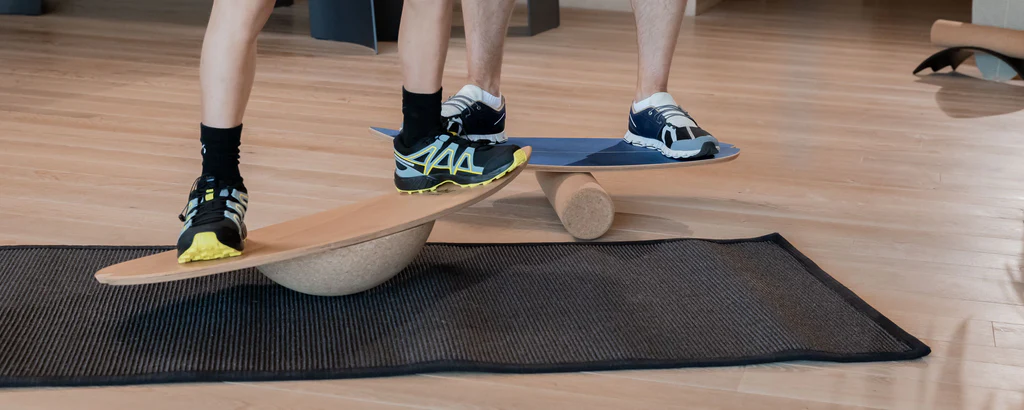
Drummer’s Guide: Liberating Your Ankles and Breaking Through the BPM Bottleneck
In discussions about Drummers’ ankle exercises,, we often make a mistake: focusing too much on the explosive power of the thigh muscles while neglecting the control of the calf muscles (tibialis anterior) and the deep stabilizing muscles of the ankle.
1. Why isn’t your double pedal speed fast enough?
When you try to increase double pedal speed,, if your ankles aren’t stable enough, your thighs need to overcompensate to maintain balance. This leads to muscle stiffness, and naturally, you won’t be able to increase your speed. The training logic of the Balance Board is “micro-imbalance.” When you stand on the board, your ankles must make dozens of micro-adjustments per second to avoid falling.
- Activate the tibialis anterior muscle: This is a key muscle responsible for lifting the toes. Heel-toe rocking on the board can deeply strengthen the endurance of this muscle, allowing your toes to rebound faster during high-speed strides.
- Limb Independence: The balance board forces you to learn to “stabilize your lower body and relax your upper body.” This is the physical basis for the limb independence required for drumming.
2. The core secret of sitting posture balance
Many people think that balance boards can only be used standing up. Wrong! Try placing the balance board in front of your drum bench and stepping on it with both feet (sitting position). This simulates the dynamic instability you experience when playing the hi-hat and bass drum. If you can maintain your balance on the board, you can sit as still as a rock on the drum bench, thus transferring all your energy to the drumheads instead of wasting it maintaining your posture.
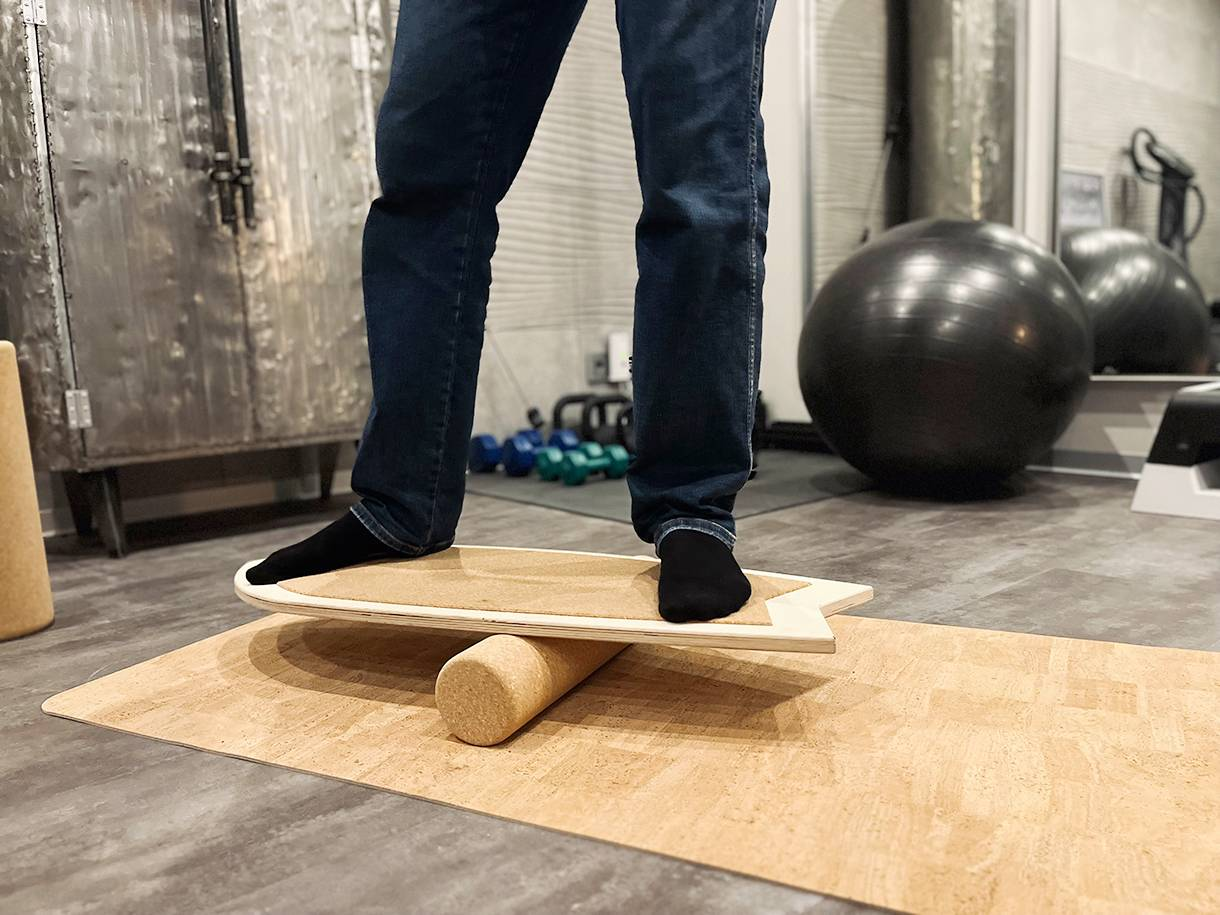
Guitar/Bass Player’s Guide: Effects Dance Moves and Spinal Rescue
For guitarists, especially those with huge pedalboards (effects boards) and shoegaze-like instruments, performing on stage is essentially a dance on one leg.
1. The Art of Standing on One Leg
When you place one foot on a volume pedalvolume pedal or wah pedal,wah pedal, the other leg (the supporting leg) bears your entire weight. If your glutes and core in the supporting leg aren’t strong enough, your pelvis will tilt, leading to a distorted stage performance posture and causing lower back pain. Practicing single-leg standing on a balance boardbalance board simulates this “pedal-stepping” posture. It forces your supporting leg to root itself into the ground like a tree root, ensuring your body’s midline remains vertical regardless of the complex movements your other leg is making.
2. Dynamic Core and Stage Presence
You’re not stationary on stage. You need to headbang, run, and interact with the audience. Balance boardboard training focuses on reactive stability.reactive stability. It teaches the body how to quickly lock the spine using deep core muscles when the center of gravity changes rapidly. This means you can run around the stage with a heavy bass on your back and then instantly stop to execute a precise slap without making a mistake due to inertia.
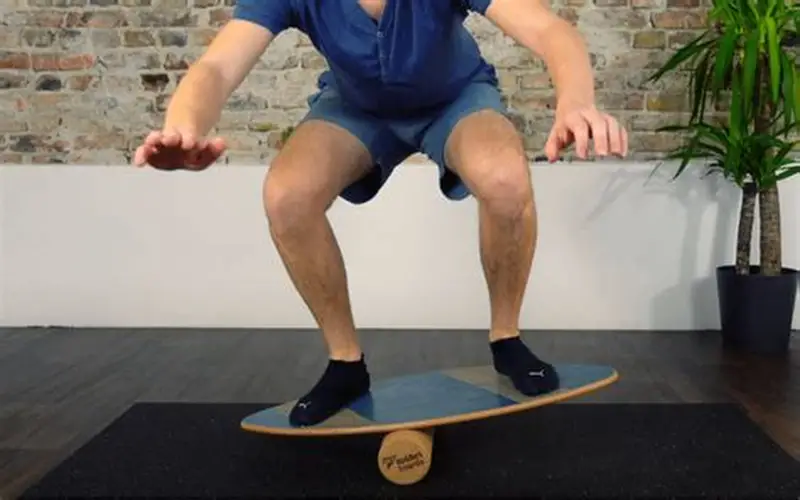
Training Plan: A 15-Minute Routine from Backstage to Stage
Don’t treat this like an hour-long fitness class. Think of it as a warm-up before you go on stage.
Phase 1: Core Activation (3 minutes)
Action: Stand with both feet on the balance board,balance board, keeping the board level.
Objective: To awaken the core muscles and bring the brain into a state of focus. This is also remarkably effective in eliminating stage fright because it forces you to live in the present moment.
Phase 2: Ankle flexibility (5 minutes)
Action: Control the board to slowly tap back and forth (rocker style).
For musicians only: Drummers can hold drumsticks and strike the air while maintaining balance (air drumming). This trains you to maintain upper body rhythm on unstable ground.
Phase 3: Simulated pedal (5 minutes)
Action: Try standing on one leg (you can hold onto a wall for support).
Objective: To strengthen the gluteus medius on one side. This is to prevent your body from wobbling like a noodle when you pedal.
Advanced equipment recommendation: Musicians don’t need overly aggressive boards. Choose a balance board with cork wheels; its rolling speed is moderate, and it’s quiet, so it won’t interfere with your auditory judgment during practice.
Your Body Is Your First Musical Instrument
In the music industry, we’re willing to spend thousands of dollars on a snare drum or a vintage guitar, but rarely are we willing to invest time and money in the vessel on which we play the instrument—our bodies.
A balance board won’t increase your music theory knowledge, but it will allow you to maintain precise control over every 32nd note even after a two-hour metal performance. It gives you a sense of confidence, a feeling of absolute control over your body.
For your next tour, leave the dumbbells at home and bring a balance board. Your spine and your audience will thank you.
FAQ
Q1: Will practicing on a balance board damage my wrists? I’m a guitarist, and my hands are very important to me.
That’s a good question. The main risk is landing on your hands when you lose your balance. Beginners are strongly advised to practice on a carpet and start by holding onto a wall or door frame. For musicians, your hands are your professional lifeline; never attempt difficult moves without any safety measures. We’re aiming for core control, not acrobatic performances.
Q2: Will this really help me get my bass drum speed to 200+ BPM?
A balance board itself can’t teach you footwork techniques (like swivel or heel-toe), but it provides the hardware foundation needed to increase double pedal speed. Many drummers struggle to reach high speeds because of insufficient endurance in the front calf muscles, leading to ankle stiffness at high speeds. A balance board effectively strengthens the endurance and explosiveness of these muscles, laying a solid foundation for breaking through speed plateaus.
Q3: How long should I practice each day? Will it cause my legs to ache before a performance?
As part of a musician’s physical training, it’s recommended to do 10-15 minutes each time. Don’t train to muscle exhaustion; that’s for the gym. Your goal is to activate the neural priming connection. If it’s the day of a performance, it’s recommended to do 5 minutes of low-intensity warm-up exercises 30 minutes before going on stage; don’t overexert yourself.