What happens when the balance board becomes out of sync with breathing rhythm?

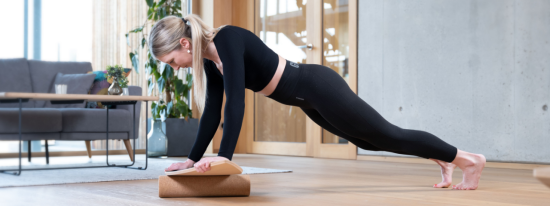
On a sunny morning, with sunlight streaming through the window and onto the floor, the balance board sits quietly, awaiting the next trainee. You step onto it and begin to swing but suddenly find your breathing rapid and uneven, your body seemingly resisting every tiny sway.
This is not uncommon: when balance board training is out of sync with your breathing rhythm, body stability is significantly affected. This article will analyze this phenomenon from scientific, practical, and real-life experience perspectives, exploring how to rebuild training rhythm through breathing to maximize the effectiveness of balance training.
The implicit connection between breathing and balance
Balance training involves more than just the coordination of the lower limbs and core muscles; it relies more deeply on the interaction between the nervous and respiratory systems. Studies on balance board breathing control have shown that breathing rhythm can affect the stability of the core muscles, particularly the involvement of the diaphragm.
Diaphragmatic stability plays a crucial role in balance board training: it not only regulates intrathoracic pressure but also works in conjunction with deep abdominal muscles to provide the internal support needed for fine-tuning balance.
When breathing is disordered, especially when it is too fast or irregular, the contraction and relaxation of the diaphragm cannot be synchronized with the body’s subtle adjustments, causing small shifts in the body’s center of gravity to gradually amplify.
As a result, even small movements can easily lead to a feeling of swaying or instability. This phenomenon is particularly noticeable in beginners or during advanced balance maneuvers.
The impact of respiratory disturbances on training effectiveness
| Impact Area | Consequences of Disordered Breathing |
|---|---|
| Motor Automation | The brain must allocate extra attention, reducing the efficiency of neural adaptation. |
| Core Activation | Synergy between the diaphragm and transverse abdominis is disrupted. |
| Injury Risk | Accelerated fatigue leads to delayed reaction times and insufficient joint control. |
- That hinders motor automation: Motor automation emphasizes neural adaptation and the automation of movement patterns. When breathing is uncoordinated, the brain must allocate extra attention to maintain stability, reducing the efficiency of motor automation.
- Insufficient activation of the core muscles: The core muscles, including the transverse abdominis and multifidus, work in synergy with the diaphragm. When breathing is disordered, this synergy is disrupted, and the core muscles cannot effectively support the spine and pelvis.
- Accelerated fatigue and increased risk of injury: Unstable breathing increases the burden on the cardiopulmonary system, making the body more prone to fatigue. Accumulated fatigue leads to delayed reaction times, increasing the risk of sprains or falls.
How to identify potential risks
Identifying postural deviations is the first step before considering using a balance board. Professional physical therapists or sports coaches typically assess training suitability based on the following aspects:
- Pelvic and lumbar spine angle: People with anterior pelvic tilt have a noticeable forward lumbar spine and protruding buttocks when standing.
- Foot structure: Observe the height of the arch, pronation or supination, and the foot landing pattern when walking.
- Knee joint position: Knee valgus or knee varus can affect the distribution of force on the lower limbs during balance training.
- Core control: Try basic balance movements. If you cannot maintain stability, it means your core muscles are not yet ready to withstand unstable training.
Potential benefits of balance board
| Benefit Category | Impact on Performance |
|---|---|
| Neuromuscular | Enhance control and improve reaction time. |
| Stability | Improve lower limb stability and core muscle endurance. |
| Dynamic Movement | Positively impact performance in running and jumping. |
While risks exist, the benefits of balance boards cannot be ignored. Scientific research shows that proper use of balance boards can significantly enhance neuromuscular control and improve lower limb stability and reaction time.
For individuals with mild postural deviations, balance boards can still serve as an auxiliary tool for correcting movement patterns when trained under professional guidance.
- Low-amplitude swaying exercises can activate the deep transverse abdominis and gluteus medius muscles.
- Simultaneously, balance board training can increase lower limb proprioception, helping to enhance ankle and arch stability.
How to Rebuild Training Rhythm Through Breathing
Once you understand the role of breathing in balance, adjusting your breathing strategy becomes key to improving training efficiency. The following methods can help improve balance board breathing control:
- Rhythmic breathing: Synchronizes with each subtle movement; inhale as you slightly lift your body, and exhale as you adjust your center of gravity.
- Abdominal breathing: Strengthens diaphragmatic control, ensuring slight expansion and contraction of the abdomen. This stabilizes core pressure.
- Short, focused training sessions: Divided into 3-5 minute segments, emphasizing the synchronization of breathing and movement.
- Visual feedback: Involves observing one’s own movements through a mirror or video to check if breathing and fine-tuning are synchronized.
Scientific evidence and user experience
According to a study published in Frontiers in Physiology, participants who underwent eight weeks of systematic breathing training combined with balance training significantly outperformed a control group in both dynamic and static tests.
Real user feedback also confirms this: beginners often describe “unsteady movements and swaying body,” but after adding abdominal breathing and rhythmic breathing exercises, their sense of balance is significantly improved, and the training experience is smoother.
Professional screening and training strategies
The key is to screen candidates before training, rather than blindly following trends. Here are some suggested strategies:
- Prioritize movement assessment: Before using the balance board, conduct a professional posture assessment.
- Phased training: Initially use low-instability training and gradually transition to dynamic swaying.
- Corrective exercises: Incorporate core strengthening and hip and ankle correction exercises.
- Monitoring and feedback: Pay attention to pain or abnormal force during training.
When choosing a training program, a professional screening approach is more important than simply pursuing fancy balance board moves.
By introducing breathing control, the training strategy can be upgraded:
- Treat breathing as a core variable in training.
- Optimize balance board diaphragm stability by incorporating breathing rhythm.
- Combine short, high-frequency breathing and balance exercises for a differentiated training rhythm.
Conclusion
Balance boards themselves do not possess magical corrective abilities; their effectiveness depends on the trainee’s postural foundation and training strategy. When the balance board is out of sync with breathing rhythm, training effectiveness and body stability will be limited.
By scientifically managing breathing and optimizing the breathing pattern for balance training, not only can movement accuracy be improved, but core muscle coordination can also be enhanced, reducing the risk of injury. Balance training is not just a contest of muscle strength but also a comprehensive exercise of the nervous system, breathing, and core control.
Before starting training, it is essential to understand your own body characteristics, identify potential risks, and then develop a scientific training plan. Your balance training should not just be about achieving superficial swaying but rather about truly improving movement patterns through professional selection and gradual progression.
Training is a dialogue with your own body. A balance board can be your assistant, but first, it requires you to become your own posture detective.