
In a corner of the gym, you might have seen someone swinging effortlessly on a small balance board, seemingly relaxed yet incredibly focused. You might wonder, is this seemingly simple exercise really suitable for everyone?
Especially when there are postural issues such as anterior pelvic tilt or overpronation, could the use of a balance board pose unexpected risks? This article will analyze the potential impact of balance boards on postural deviations from a professional perspective, helping you make a rational judgment before starting your training.
The relationship between balance board and postural deviation
The core of balance board training is to stimulate the neuromuscular system through the unstable surface, thereby improving stability, coordination, and core control. However, no training tool is a panacea, especially among individuals with specific postural problems; the training effect of a balance board can vary drastically depending on individual differences.
Anterior Pelvic Tilt Risks
For example, anterior pelvic tilt is a common postural deviation, often accompanied by lumbar lordosis and excessive tension in the hip flexors.
In this case, if one performs standing or light dynamic exercises directly on a balance board, the body may unconsciously rely on existing muscle patterns to maintain balance instead of activating the correct core muscles.
Over time, this not only fails to correct anterior pelvic tilt but may also exacerbate lower back pressure, creating a risk of “reinforcing incorrect movement patterns.”
2. Lower Limb Chain Issues
Similarly, the way people with inverted feet exert force on balance boards also presents risks. The instability of balance boards requires active adjustment of the ankle joint, but the structural problems of inverted feet can lead to arch collapse or knee valgus, increasing the overall load on the lower limb chain and raising the probability of ankle, knee, and even hip injuries.
According to clinical observations, cases of knee pain occurring in people with inverted feet after unassessed balance training are not uncommon.
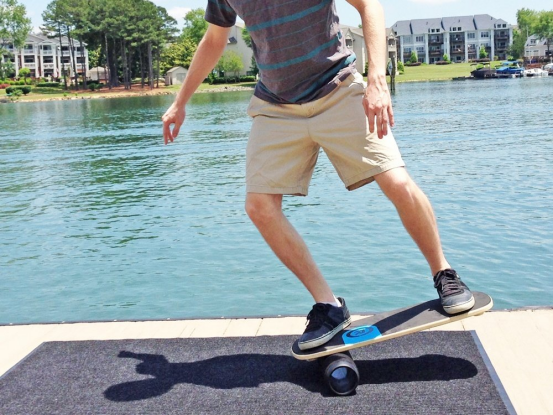
How to identify potential risks
Identifying postural deviations is the first step before considering using a balance board. Professional physical therapists or sports coaches typically assess training suitability based on the following aspects:
- Pelvic and lumbar spine angle: People with anterior pelvic tilt have a noticeable forward lumbar spine and protruding buttocks when standing.
- Foot structure: Observe the height of the arch, pronation or supination, and the foot landing pattern when walking.
- Knee joint position: Knee valgus or knee varus can affect the distribution of force on the lower limbs during balance training.
- Core control: Try basic balance movements. If you cannot maintain stability, it means your core muscles are not yet ready to withstand unstable training.
After identifying these risk factors, trainees can more scientifically arrange the order of using the balance board, first conducting basic training targeting the core and posture and then introducing instability training.
Potential benefits of balance board
| Benefit Category | Impact on Performance |
|---|---|
| Neuromuscular | Enhance control and improve reaction time. |
| Stability | Improve lower limb stability and core muscle endurance. |
| Dynamic Movement | Positively impact performance in running and jumping. |
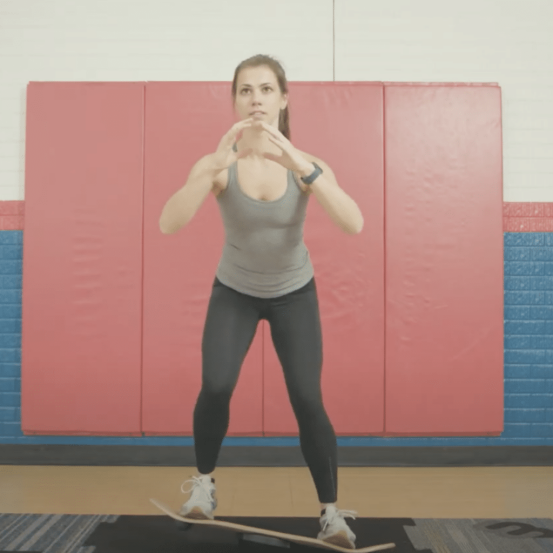
While risks exist, the benefits of balance boards cannot be ignored. Scientific research shows that proper use of balance boards can significantly enhance neuromuscular control and improve lower limb stability and reaction time. In individuals with normal posture, this training can improve balance, enhance core muscle endurance, and even positively impact performance in dynamic movements such as running and jumping.
For individuals with mild postural deviations, balance boards can still serve as an auxiliary tool for correcting movement patterns when trained under professional guidance.
- Low-amplitude swaying exercises can activate the deep transverse abdominis and gluteus medius muscles, helping to gradually improve the stability of anterior pelvic tilt.
- Simultaneously, balance board training can increase lower limb proprioception, and with gradual guidance, it can also help enhance ankle and arch stability in individuals with foot inversion.
However, this must be combined with corrective training, rather than relying solely on board instability.
Professional screening and training strategies
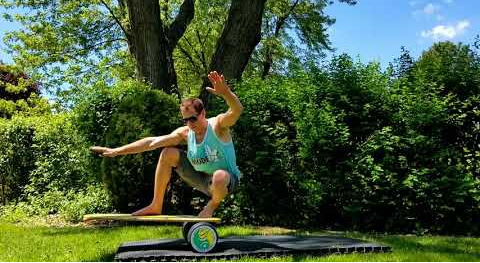
The key is to screen candidates before training, rather than blindly following trends. Here are some suggested strategies:
- Prioritize movement assessment: Before using the balance board, conduct a professional posture assessment, including pelvic angle, foot structure, and core stability.
- Phased training: Initially use low-instability training, such as standing on one leg or slight swaying, and gradually transition to dynamic swaying or training with eyes closed.
- Corrective exercises: Before and after balance board training, incorporate core strengthening and hip and ankle correction exercises to ensure the correct muscle groups are activated.
- Monitoring and feedback: Pay attention to pain or abnormal force during training. If discomfort occurs in the knees, lower back, or ankles, adjust the training method immediately.
When choosing a training program, a professional screening approach is more important than simply pursuing fancy balance board moves.
Many sports science studies and user case studies show that unassessed training may amplify existing postural deviations, while systematic screening and corrective training can effectively utilize the balance board to improve movement quality. If you want to learn more about how to scientifically plan balance board training and develop a safety plan that addresses your individual posture issues, you can refer to this professional guide on balance board posture issues.
Conclusion
Balance boards themselves do not possess magical corrective abilities; their effectiveness depends on the trainee’s postural foundation and training strategy. For individuals with pre-existing pelvic tilt, foot inversion, or other deviations, indiscriminate use may pose risks. However, with professional assessment and phased training, balance boards can still be an effective tool for improving stability, core control, and movement precision.
Before starting training, it is essential to understand your own body characteristics, identify potential risks, and then develop a scientific training plan. Your balance training should not just be about achieving superficial swaying but rather about truly improving movement patterns through professional selection and gradual progression, making each training session safer and more effective.
Training is a dialogue with your own body. A balance board can be your assistant, but first, it requires you to become your own posture detective.