A Must-Read for Muay Thai and Boxing Fighters: Finding the “Immovable” Strike Power on the Balance Board

Strength doesn’t come from your biceps.
Walk into any boxing gym, and you’ll always see this scene: newcomers frantically swinging their arms at the punching bag, trying to smash it through with their muscle power. Meanwhile, on the other side of the ring, a seemingly unassuming veteran can deliver a seemingly effortless jab that produces a cracking sound like a whip.
What’s the difference?
A common saying in the world of combat sports is, “Power begins in the feet, is controlled by the core, and is expressed through the fist.”
If you feel your punches are always “floating,” or if you easily lose your balance and get pushed down by your opponent after kicking in a Muay Thai sparring match, the problem is most likely not with your arms, but with your “foundation.”
Traditional ground training, while solid, can also mask minor errors in your weight transfer.
At this point, you need a ruthless “coach”—the Balance Board. It shows no mercy; if your center of gravity shifts by even a centimeter, or your power generation structure becomes loose, it will immediately send you crashing to the ground.
Today, we’ll explore how to use this unstable tool to reshape your kinetic chain, allowing you to return to solid ground with rock-solid hitting quality.
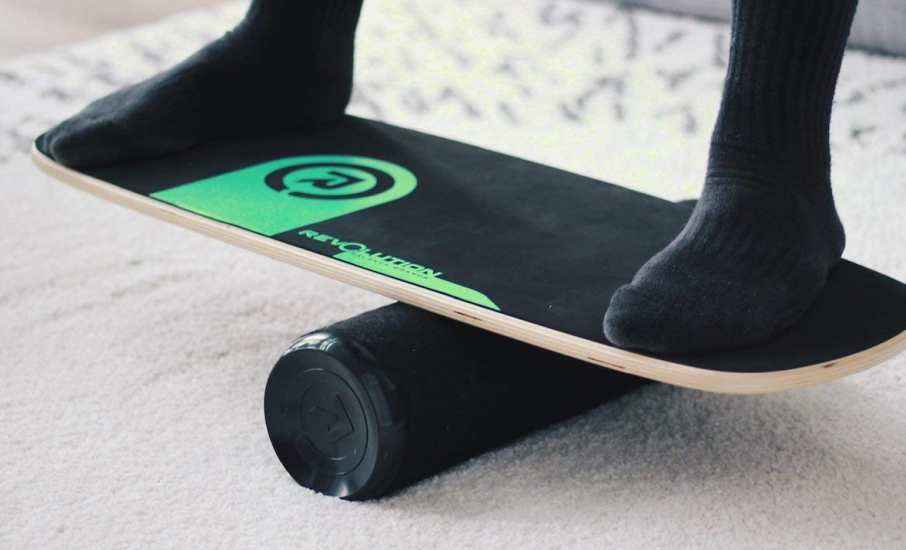
Unveiling the power chain: Why is it harder to punch on the board?
In core boxing training, the balance board acts like a magnifying glass.
1. The Ultimate Test of Ground Reaction Force
When you throw a cross, the power comes from the reaction force of your back foot pushing off the ground. On a hard floor, you can “cheat” using the rough friction to force your body to twist. But on the rollers of a balance board, that friction is almost zero.
To prevent the board from flying off, you must learn to root vertically downwards. You must control your center of gravity with extreme precision, keeping it perpendicular to the contact point with the rollers.
This training forces you to eliminate unnecessary lateral swaying, making the transmission of power pure and direct.
2. Eliminate “preparatory actions.”
Many boxers subconsciously “squat” or “lean back” before throwing a punch. On the balance board, these unnecessary preparatory movements immediately disrupt balance.
It forces you to learn to explode from a standstill, which is key to increasing punching power and preventing your opponent from predicting your moves.
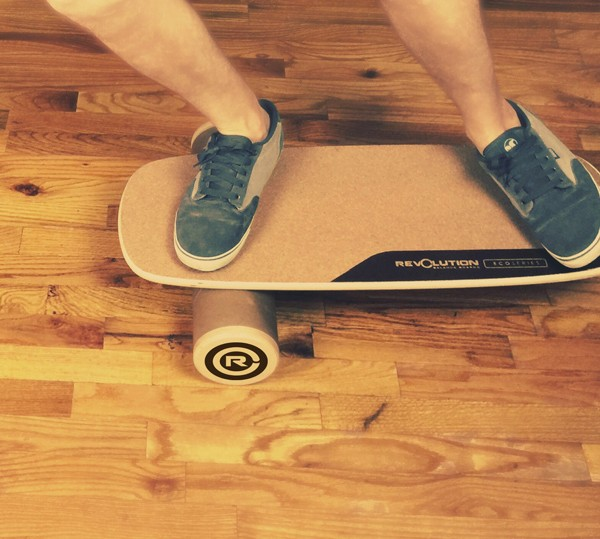
Practical Exercise: Finding Stability Amidst Shaking
We do not recommend beginners to perform full-force heavy sandbag strikes on the board, as that is dangerous. The correct way to use a balance board is through shadowboxing and refining technical details.
Training 1: Jab & Recoil
This is the most basic and also the most important exercise.
Action: Stand on the board and maintain a fighting stance. Try to throw a jab.
Challenge: According to Newton’s Third Law, the force of a punch generates a reaction force that pushes against your body. You won’t feel it on flat ground, but on a board, this reaction force is enough to make you fall backward.
Objective: To use the core muscles to “lock” the body at the moment of punching, neutralizing the reaction force.
This trains extremely strong core anti-rotation ability, allowing you to quickly recover and defend even if you miss in actual combat, without losing your balance.
Training 2: Muay Thai Knee Raise Defense (The Check)
For Muay Thai fighters, single-leg balance is the line between life and death.
Action: Try performing a teep (front kick) with a raised knee on the board, or simulate a check (defensive sweep kick).
In-depth analysis: When you lift one leg, the ankle and gluteus medius of the supporting leg must instantly bear all the pressure. The balance board simulates the shift in center of gravity when hit by an opponent’s roundhouse kick.
If you can maintain your knee-lifting position for 3 seconds on a swaying board, then in the ring, your opponent’s low kick will be nothing more than a tickle. This is the most effective Muay Thai balance training.
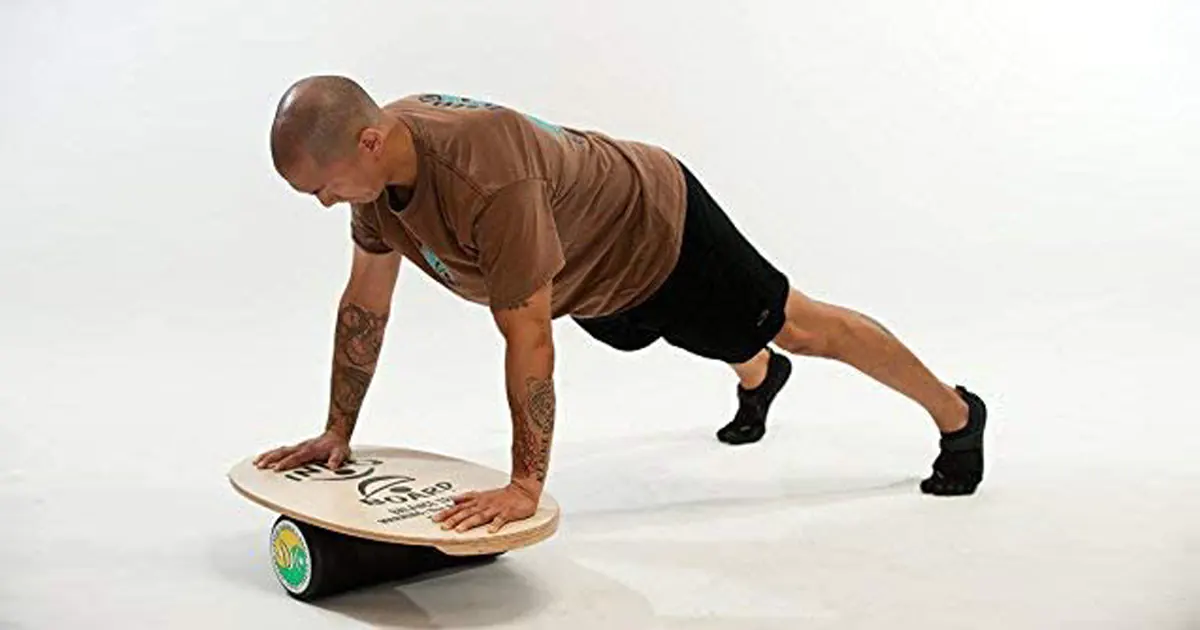
Microscopic Reshaping of Footwork: From “Jumping” to “Glide”
Although you can’t perform wide-ranging slides on the board, it can train the core logic of combat footwork training: weight transfer.
On the board, you can’t change stances by “jumping”; you have to shift your center of gravity by “flowing.”
This delicate sense of control can help you get rid of the bad habit of “jumping too high” in actual combat (this is usually a common problem for beginners, making them easy targets for opponents to exploit timing differences).
Training suggestion: Try extremely slow left-right weight shifts on a board. Imagine your body flowing like mercury.
Once this feeling is ingrained in your nervous system, you’ll find your stride becomes closer to the ground and more unpredictable when you return to flat ground.
Equipment Recommendation: For combat training, you need a board with extremely high load-bearing capacity and an excellent anti-slip surface to cope with sweat during barefoot training.
Back in the ring, the ground had never felt so solid.
Balance board training lies in the contrast after “unloading” the weight.
When you get used to battling gravity on a 10-centimeter-diameter roller and then return to a flat canvas ring, you’ll have the illusion that the ground has turned into solid rock or even has a suction force.
You’ll find that your jabs are no longer unpredictable, your defense is rock solid, and while you’re increasing your punching power, you’re not only hitting harder, but more importantly, you’re hitting more steadily.
In this arena where victory or defeat is decided in milliseconds, whoever has a more solid foundation will be the ultimate winner.
FAQ
Q1: Can I hit the punching bag on the balance board?
This is strongly discouraged for beginners. Hitting a punching bag generates a huge reaction force, which can easily lead to falls and injuries on an unstable board.
It is recommended to start with shadowboxing, combined with light dumbbells (1-2 pounds). Only when you have complete control of the board and have a professional coach nearby for spotting should you attempt lightweight hand target training.
Q2: Will this training help improve my footwork?
It helps, but indirectly. The balance board doesn’t allow you to practice sliding or circling steps, but it strengthens the ankle ligaments and calf muscles responsible for footwork initiation and sudden stops.
It improves your proprioception. This perception makes your footwork lighter and your changes of direction quicker in combat, making it an important supplement to advanced combat footwork training.
Q3: Do Muay Thai fighters need to train barefoot?
Yes, barefoot training is absolutely recommended. Muay Thai and MMA are both barefoot sports.
Training barefoot on the board directly stimulates the proprioceptors in the soles of your feet, simulating the feel of real combat. The cushioning layer in the sole filters out crucial ground feedback.
However, make sure your board surface has proper anti-slip treatment to prevent slipping due to sweat.