
In balance training, when you stand on the balance board and your movements seem smooth and effortless, do you ever wonder, “Am I not making progress?” For a long time, many people have been accustomed to measuring training intensity using the standard of “the more tiring, the more effective,” but in the world of balance training, this concept may be completely misguided. In fact, training becoming easier is often a real signal of improved neural efficiency and automatic movement, not a sign of slackness.
The Neurological Explanation Behind Effortless Movement
on a balance board is actually a complex process of continuous adaptation by the neural control system. In the initial training phase, the nervous system will mobilize muscle groups at full capacity to avoid falling or losing balance. This “overexertion” is usually accompanied by fatigue and stiffness. However, as neural adaptation occurs, communication between neurons becomes more efficient, and muscle coordination becomes smoother, making the movements appear effortless.
This phenomenon is known as “motor automation” in sports science. As your balance improves, your body no longer needs to make extensive adjustments each time, allowing your brain to focus on higher-level motor control rather than simply maintaining basic balance. In other words, easier training is often a clear sign of progress, not a sign of stagnation.
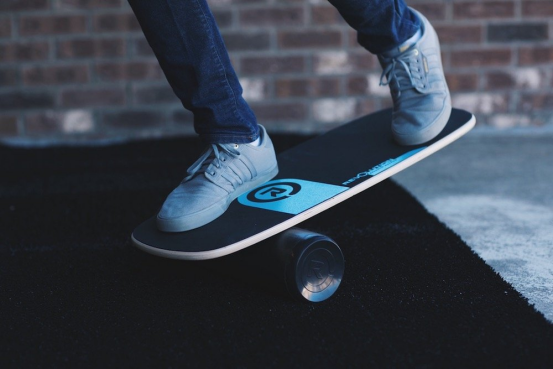
Balance board adaptation signs: common indicators that training becomes easier
In long-term balance board practice, several significant adaptation indicators can help you determine whether you are making progress:
- tension
in their calf, core, and ankle muscles while standing on a board. As they adapt, this muscle tension will significantly decrease, but this doesn’t mean the training is ineffective. Rather, it indicates that the nervous system is regulating muscle groups more efficiently. - balance
board for longer without feeling fatigued. This “effortless extension” is the result of both neural adaptation and muscular endurance. - Reduced movement correction means
You don’t need to frequently adjust your posture when your body experiences minor swaying. Improved movement fluidity indicates that the brain and muscles have formed a stable coordination pattern, which is an important part of the balance board progress indicators. - More natural transitions between postures
indicate that balance training is impacting your overall motor control, not just local muscle strength, when you switch from one balance posture to another.

Why doesn’t the idea that “the more tiring, the more effective” apply to balance training?
Traditional strength training emphasizes muscle fatigue as an indicator of progress, but the core of balance training lies in the optimization and coordination of the nervous system. Pursuing excessive fatigue can lead to:
- Incorrect movement patterns: Compensatory movements are more likely to occur when fatigued, which reduces the quality of training.
- Long-term decline in motivation: If training always leaves you feeling exhausted, it’s easy to lose the desire to continue practicing.
- Increased risk of injury: Unstable muscle control can easily lead to ankle or knee injuries.
Conversely, training that feels easy means the body is performing the same balancing task with less energy expenditure, which is the core value of balance training getting easier—increased efficiency and long-term progress.
How to determine if ease is progress rather than stagnation?
Ease does not equate to stagnation; the key lies in observing the overall performance during training.
- As the difficulty of the movements gradually increases,
If you can attempt more complex balance postures and still handle them with ease, it means that the training effect is accumulating. - The stability and control enhancement
The test assesses the body’s ability to make fine adjustments in different directions. If control is significantly improved, it indicates that the nervous system is adapting well. - on improving the coordination of core and smaller muscle groups.
Pay attention to whether the coordinated movements of the core, hips, and ankles are more natural. This is also an important indicator of progress.
These signals often reflect training results more accurately than feelings of fatigue. You can even use balance board adaptation signs as a reference for long-term progress, helping you adjust your training plan instead of simply pursuing “sweating” or “feeling tired.”
Strategies to maintain training motivation
Training can sometimes feel easy and create the illusion that you’ve reached your limit. To maintain long-term training motivation, try the following methods:
- record the
time you can maintain the position and the complexity of the movement each time. This way, you can see progress in your data even if it feels easy. - Set progressive challenges:
As balance training becomes easier, try adding variations such as single-leg support and eye-closed balance to allow the nervous system to continuously adapt. - By combining functional training
With balance exercises and everyday movements, such as jumping or running, and observing improvements in movement quality, this sense of transformation can significantly enhance a sense of accomplishment. - Regularly review progress metrics
and compare past performance every now and then to confirm that the “sense of ease” truly comes from improved neural efficiency rather than training stagnation.
Conclusion
In balance board training, easier movements often indicate good neural adaptation and improved motor automation, rather than training stagnation. By identifying balance board adaptation signs and balance board progress indicators, you can scientifically assess progress and maintain long-term training motivation. Let go of the old notion that “the more strenuous, the more effective,” and embrace a balanced training approach that combines ease and efficiency to achieve truly sustainable physical growth.
During training, you can try more variations to make balance exercises not only easy but also challenging. Perhaps the next time you stand on the balance board, you’ll find that ease itself is the most powerful proof of progress.