
In modern rehabilitation training, the recovery of ankle, knee, and core control is not only crucial for athletic performance but also directly impacts functional safety in daily life. Imagine a patient returning to sports after an injury; the slight sway when initially standing, or the minor instability when climbing stairs, all remind us that stability training is indispensable. And in all of this training, the balance board is gradually becoming an indispensable tool in the hands of rehabilitation therapists.
Basic Balance Training from a Rehabilitation Perspective
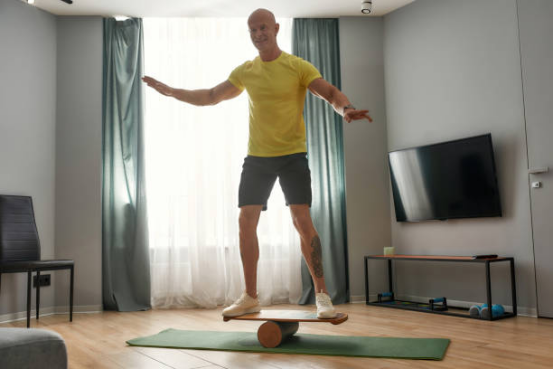
In the field of sports rehabilitation, traditional rehabilitation methods mostly focus on static muscle strength training. However, research shows that muscle strength alone is insufficient to guarantee the full recovery of joint function. Balance board training provides a dynamic challenge that requires users to maintain control in a multi-directionally unstable environment, thereby activating deep muscle groups and the vestibular system. Through this stimulation, rehabilitation training can better simulate real-life scenarios, improving joint proprioception and reaction speed.
the rehab balance system emphasizes the systematic nature of balance training. By designing progressive training modules, from simple single-leg standing to complex dynamic balance movements, each stage of the rehabilitation process has targeted goals. Studies show that patients using balance boards for progressive training experience significant improvements in ankle stability, knee weight-bearing capacity, and core muscle coordination.
Key training pathways for ankle stability
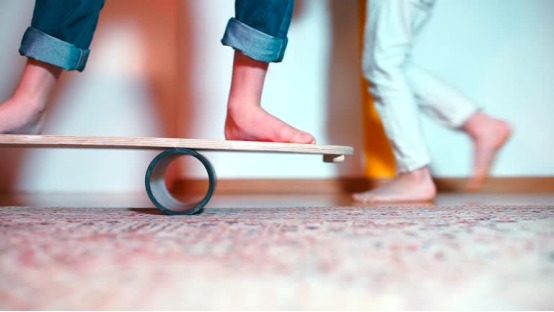
The ankle joint is the most easily overlooked part of rehabilitation training, yet it is a high-risk area for many sports injuries. After injury, the sensitivity of the ankle’s proprioceptors decreases, and muscle coordination weakens, often leading to an increased risk of secondary injury.
Ankle stability board training precisely stimulates the muscles surrounding the ankle joint. Initial training can begin with a slight incline of the balance board, combined with static standing and minor forward and backward movements, helping the ankle regain proprioception. As control improves, training can gradually incorporate multi-directional inclines and mild dynamic movements to simulate the joint stress environment during walking, running, and even jumping. Real clinical cases show that this transition from static to dynamic training effectively improves stability scores after ankle injuries and increases patients’ confidence in returning to activity.
Rehabilitation strategies for coordinated control of the knee joint and core
Knee stability depends not only on the strength of the quadriceps and hamstrings, but also on the coordinated work of the core and lower limbs. During rehabilitation training, if only local muscle strength is focused, the knee joint may still experience dislocation or instability during complex movements.
In post-injury balance flow training, the balance board can serve as a bridge between core control and lower limb coordination. Training typically includes the following levels:
- Static balance : Stand on one leg and tilt slightly forward, backward, or sideways to ensure stable control of the knee joint under minimal load.
- Dynamic adjustment : Perform slight squats, torso rotations, or small movements on the board to improve the knee joint’s response speed to external disturbances.
- Functional load : Simulates daily life or sports movements, such as going up and down stairs, light jumping, emphasizing the synchronous coordination of the core muscles and the knee joint.
Through this gradual training, patients can not only restore knee joint stability, but also improve their overall motor control without increasing joint pressure.
Core deep muscle activation and balance board application
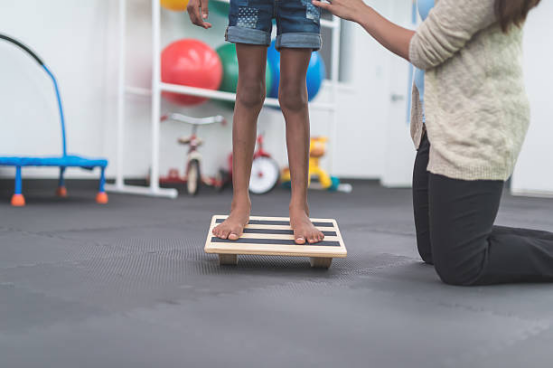
In rehabilitation training, activation of the deep core muscles often determines the long-term effectiveness of the training. The dynamic instability of the balance board forces the core muscles to constantly adjust their posture, forming a continuous fine-tuning mechanism. This has a significant impact on spinal stability, pelvic control, and the coordination of the entire kinetic chain.
In practice, training can begin with static postures, such as standing or semi-squatting on a balance board, gradually incorporating light hand or upper limb movements to further improve neuromuscular response. Studies have found that rehabilitation patients who consistently undergo this core activation training show a significant reduction in fall risk and a marked improvement in functional mobility.
The principle of progressive balance training in rehabilitation training
In rehabilitation pathways, a progressive approach is key. The difficulty and instability of training should be gradually increased for patients with different injury types and rehabilitation stages. Generally, the following principles should be followed:
- Establish a stable foundation first : Start with low inclination and static control to establish a basic sense of stability.
- Dynamic control transition : Incorporate directional movements and slight perturbations to train reaction speed.
- Functional integration : Simulates real-life or motor movements, integrating the lower limbs, core, and vestibular system.
- Individualized adjustment : Adjust the intensity and frequency of training based on the patient’s recovery and feedback.
This training model not only aligns with rehabilitation science theory but also significantly improves rehabilitation efficiency. Combined with training programs designed using the Rehab Balance System , patients can gradually rebuild stability and functional control in a safe and controlled environment.
Practical Application and Clinical Feedback
Many rehabilitation facilities have begun incorporating balance board training into their standard training programs. Clinical data shows that after 6-8 weeks of balance board rehabilitation training, ankle and knee joint function scores improve by an average of 15%-25%, and core control test results show significant improvement. Patients generally report that although the training process requires concentration, every small improvement in balance brings a significant sense of accomplishment.
Balance boards are equally practical in home rehabilitation environments. With a well-planned training space and progressively designed movements, professional-grade rehabilitation training can be achieved at home. Furthermore, online resources and video guidance allow patients to conduct more scientific self-training while reducing rehabilitation costs and time burdens.
Conclusion
Rehabilitation training is not only about rebuilding joint strength, but also a comprehensive challenge involving body control, neurofeedback, and core coordination. Balance board training provides a complete rehabilitation pathway through dynamic instability exercises, covering stability improvement from the ankle and knee joints to the core muscles. The progressive and personalized training design ensures that each step is scientifically controlled, and clinical and user feedback shows that this method is significantly effective in restoring function and reducing the risk of re-injury.