
In today’s fast-paced life, many people unconsciously develop asymmetrical body habits. This may be due to prolonged exertion on one side while working at a desk, or habitually bearing weight on one side of the body in daily life. Over time, this can lead to problems such as anterior pelvic tilt, lateral deviation, and ankle imbalance.
While traditional stretching and strength training can be helpful, balance board training is gaining popularity among rehabilitation and fitness experts for truly improving body symmetry. This article will delve into the role of balance boards in body symmetry training and how to correct imbalanced body fixation through fine-tuning movements.
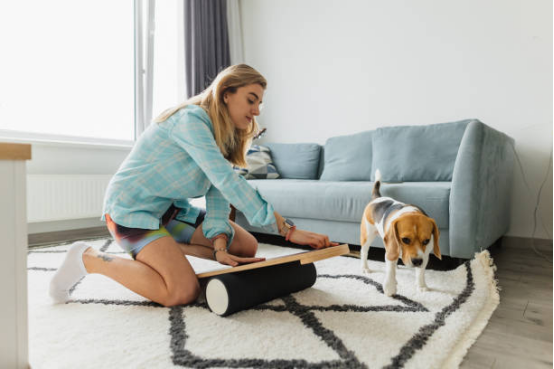
Balance Board and fine-tuning for anterior pelvic tilt
Anterior pelvic tilt is a common postural problem among modern sedentary individuals, manifesting as a forward lumbar curve, loose abdominal muscles, and a tight back. Balance board training activates deep core muscles in a slightly unstable environment, effectively improving pelvic alignment. Compared to traditional flat-ground training, balance board training requires the body to constantly adjust its center of gravity; this fine-tuning stimulates the transverse abdominis, gluteus medius, and erector spinae muscles of the lower back to work synergistically.
Specific training methods include: standing on a board with both feet, slowly rocking back and forth while maintaining a natural, neutral pelvic position. Initially, you can use a wall or handrail for support to ensure a sense of security. Studies show that slight back-and-forth rocking not only enhances the core muscles’ control over the pelvis but also helps stretch tight iliopsoas muscles, thereby reducing the degree of forward tilt.
In addition, focusing on tightening the abdomen and slightly tucking the hips can make the training more targeted. Anterior pelvic tilt is often accompanied by excessive load on the lower back. Through the balance board challenge, the body is forced to learn how to maintain a neutral pelvis in dynamics, which is the core concept of the Pelvic Alignment Board.
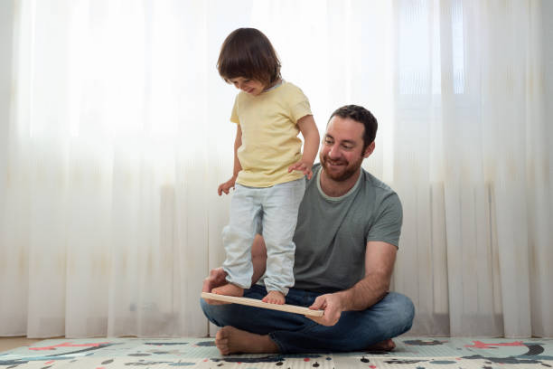
Lateral deviation and Balance Board lateral training
Left-right asymmetry is an underlying cause of many sports injuries and chronic pain. Lateral swinging exercises on a balance board offer an actionable solution to improve this problem. The lateral movements not only activate the hip abductors and adductors but also stimulate the synergistic activation of the trunk oblique muscles, thereby correcting left-right deviation.
Recommended exercises include balance board training involving standing on one leg or alternating weight-bearing on one leg. While maintaining balance, the body automatically adjusts its center of gravity, which over time can train more balanced lower limb support. Furthermore, incorporating slight upper limb rotational movements can further activate the trunk rotator muscles, helping to correct asymmetry in shoulder-hip coordination. User feedback shows that after 4–6 weeks of consistent training, the difference in weight distribution between the left and right sides significantly improved, and overall coordination and stability were noticeably enhanced.
Ankle and lower limb balance optimization
The ankle is a crucial fulcrum for the body’s symmetry. An unbalanced ankles can lead to a chain reaction of imbalances in the knee, hip, and even the spine. A balance board provides a low-impact, high-feedback training environment, ideal for training ankle stability and flexibility.
Common training methods include slow forward and backward, and side-to-side swings on a board, while attempting slight single-leg alternation. During this process, the tendons and small muscle groups around the ankle joint are continuously activated, improving neuromuscular control. Studies have shown that enhancing ankle fine-tuning ability can not only reduce sports injuries but also improve overall body symmetry, making it easier to maintain a neutral posture, especially when walking or running.
Combining elastic bands with support can increase the load on the lateral or medial muscle groups, thereby refining the training of an imbalanced body. The key to this method is to proceed gradually, first ensuring correct posture, and then gradually increasing the amplitude of the board’s sway to avoid muscle strain caused by overtraining.

Integration of Balance Board into Daily Training
Beyond targeted training, balance boards can be flexibly integrated into daily fitness plans. A few minutes of gentle back-and-forth swinging while standing on the board in the morning can activate the core and deep lower body muscles; incorporating mild balance challenges into yoga or stretching routines helps strengthen awareness of body symmetry.
Furthermore, balance board training can enhance the vestibular system and proprioceptive abilities, allowing the body to make subtle adjustments unconsciously. This means that even during daily walking or exercise, the pelvis, knees, ankles, and other joints can automatically maintain a more balanced position. This “passive repair” effect is particularly appealing to users seeking overall posture optimization.
In practice, you can try combining board training with other low-load strength training. For example, performing slight balance challenges on a board while squatting or glute bridges will enhance the synergistic training of your core muscles and lower limbs. Meanwhile, training records and video feedback can help observe differences in load between the left and right sides, allowing for further optimization of the movement.
Practical suggestions
The balance board is not only a tool for posture correction, but also a catalyst for training body symmetry. By fine-tuning movements, problems such as anterior pelvic tilt, lateral deviation, and ankle imbalance can be significantly improved. The key is to understand the muscle group targets and dynamic mechanisms of each training movement, and to gradually increase the balance challenge, rather than simply pursuing range of motion or intensity.
For users who want to experience the benefits of improved body symmetry, we recommend exploring more training combinations using the Pelvic Alignment Board, combining it with daily core activation exercises, and obtaining more balance board demonstrations to help you truly master the core secrets of left-right balance.
From the pelvis to the ankles, every tiny adjustment lays the foundation for a more symmetrical and stable body. The next time you step onto the balance board, pay attention to the feedback of each muscle, allowing your body to find its balance point amidst instability. You’ll discover that symmetry is not just about aesthetics, but also a profound functional enhancement.