
When we talk about core training, we usually focus on the superficial abdominal muscles or obliques. However, true stability and strength come from the synergistic activation of deep muscle groups. A balance board is not just a balance tool, but a training platform that activates the entire core chain. From the transverse abdominis to the obliques, and then to the erector spinae and pelvic floor muscles, each link is precisely mobilized in an unstable environment, thereby achieving deep control and overall strength integration.
The scientific logic of the core chain
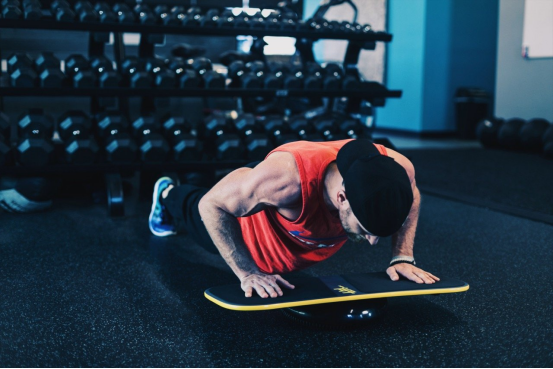
In dynamic balance training, the core muscles do not work in isolation, but rather form a continuous chain of force transmission through core chain activation . The transverse abdominis provides active compression and stabilizes intra-abdominal pressure, the obliques regulate rotational torque, the erector spinae maintains longitudinal stability of the spine, and the pelvic floor muscles ensure the stability of the pelvis and lumbar spine. Through deep core balance training, users can achieve fine coordination of various body parts on an unstable surface, significantly improving athletic performance and postural control.
Unstable training increases the complexity of muscle feedback. Every slight tilt challenges the vestibular system, receptors, and neuromuscular control. The balance board acts as a catalyst in this process, translating each fine-tuning into a full activation of the core chain.
Activation of the transverse abdominis and oblique muscles
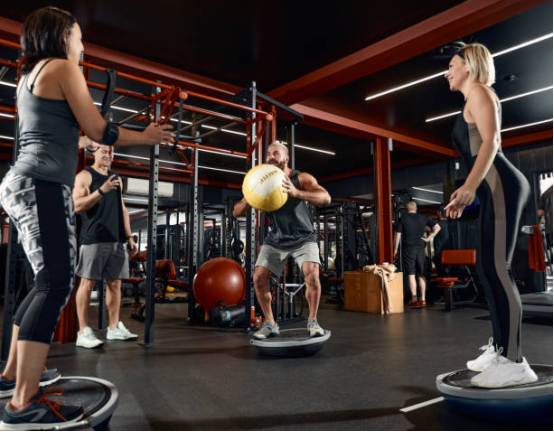
The activation of the deep core begins with the transverse abdominis. Like a natural belt, it firmly anchors the spine and pelvis. In situations of instability on the balance board, the transverse abdominis maintains stable internal pressure through continuous contraction, providing a fulcrum for rotation in the oblique muscles. The oblique muscles, in turn, are responsible for dynamic torsion and lateral control, enabling the body to perform transplanar movements on the balance board without loss of stability.
- Dynamic core rotation : Performing left and right twisting movements on the board while maintaining a neutral spine can enhance the coordination of the transverse abdominis and oblique muscles.
- Anti-torsion support : Maintain a static or semi-squatting posture to resist external disturbances, allowing the oblique and transverse abdominis muscles to be efficiently activated through slight adjustments.
- Breathing integration : Inhale deeply and actively tighten the transverse abdominis muscle. When exhaling, control the oblique muscles to participate in the rotational movement, thereby improving the control of the core chain.
These training exercises not only improve balance but also enable the deep core muscles to generate stable output during complex movements, providing a foundation for further movements.

Stable integration of erector spinae and pelvic floor muscles
In pelvic stability board training, the interaction between the erector spinae and pelvic floor muscles is a crucial link in the core chain. The erector spinae muscles, distributed longitudinally along the spine, are responsible for maintaining spinal extension and counteracting gravity, while the pelvic floor muscles act like a chassis supporting the entire core system. Their collaboration ensures smooth force transmission between the upper and lower limbs in unstable environments.
- Micro-spinal adjustment : Perform slight forward and backward tilting movements on the board, with the erector spinae muscles involved in maintaining spinal neutrality, while the pelvic floor muscles are activated to support the pelvic position.
- Core pressure perception training : Through the contraction and perception of the transverse abdominis and pelvic floor muscles, an overall pressure feedback mechanism is formed, which stabilizes the spine and pelvis under dynamic load.
- Continuous chain motion : Combining upper and lower limb movement with board tilting, it simulates real loads and disturbances during movement, enhancing deep control.
Through these exercises, users can not only enhance core stability but also improve energy transfer efficiency during exercise and reduce the risk of injury.
Advanced Core Chain Training Applications
Integrating the activation of the aforementioned core muscle groups into balance board training can form a complete chain training pattern:
- Basic chain initiation : Static support and slight board tilt, sense the synchronous contraction of the transverse abdominis and pelvic floor muscles.
- Dynamic chain extension : Incorporating rotation and lateral movement activates the oblique and erector spinae muscles, linking the entire core chain.
- Functional integration : Add upper limb pushing and pulling or lower limb stepping movements to the motion chain to form a complete and coordinated motion chain.
- Advanced Challenge : Combinations of continuous movements increase instability and speed, strengthen core neuromuscular feedback, and improve deep stability and control.
This approach is not only suitable for professional sports training, but also for users in the recovery period or those who wish to improve their core control, emphasizing the comprehensive coordination of the body chain.
Practical value and user experience
User experience shows that incorporating core chain activation into daily training significantly improves postural control and athletic performance. Through consistent use of the Pelvic stability board for deep balance training, core stability and spinal control are enhanced, while the risk of lower back and lower limb injuries is reduced during high-intensity movements.
Online training resources and progressive courses provide users with a safe practice environment, allowing them to feel the collaboration of deep muscle groups and the connection of body chains in each training session.
Conclusion
The core is not just a physical manifestation of abdominal muscles, but also a nexus of body strength and stability. Through advanced chain activation training using a balance board , the transverse abdominis, obliques, erector spinae, and pelvic floor muscles can form a complete deep core balance chain, achieving dynamic stability and strength integration.
Explore more highly professional training pathways on the balance board . Each practice session is an opportunity to become more aware of and strengthen your body’s chains, making your core the true starting point for strength, stability, and coordination.