
Leg strength is not only related to physical appearance, but also a key factor in athletic performance and daily stability. Runners, ball sports players, and even everyday fitness enthusiasts face a common problem: insufficient activation of deep leg muscles, inadequate unilateral endurance, and weak joint stability. Flat-ground training often fails to precisely stimulate core strength fulcrums such as the quadriceps, gluteus medius, and hamstrings, while a balance board provides a subtly unstable platform, allowing leg muscles to be comprehensively strengthened through dynamic challenges.
This article will delve into how balance boards can improve leg endurance and stability through single-leg control training, as well as runner strength balance methods for different athletes.
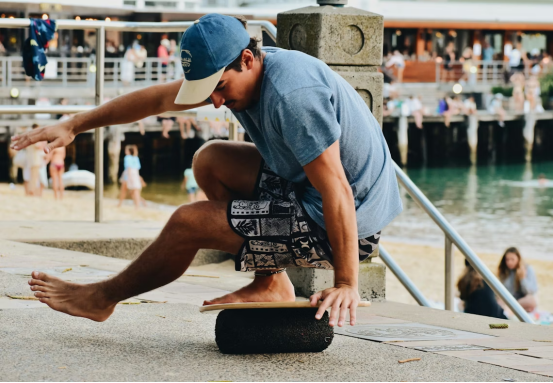
Dynamic support of the quadriceps and the application of balance board
The quadriceps play a major propulsive role in leg strength, especially in running, jumping, and squatting, where they are responsible for knee joint stability. When training with a balance board, the slight forward and backward swinging of the feet, whether bearing weight on one or both legs, forces the quadriceps to continuously exert force in an unstable state. This “passive loading” method differs from traditional squats or leg presses; it requires the muscles to adjust their contraction rhythm while maintaining posture, thereby enhancing endurance and joint protection.
Specific exercises can begin with gentle swings, taking care not to move the knees too far forward and keeping the knees and ankles in a vertical line. Combined with breath control, the quadriceps can achieve endurance improvements through prolonged fine-tuning, while simultaneously enhancing the neuromuscular perception of the knee joint. User experience shows that after 4–6 weeks of continuous training, knee stability during running is significantly improved, especially during downhill or high-intensity sprints.
The challenge of balancing the gluteus medius and lateral stability
The gluteus medius is a core muscle group responsible for single-leg support and lateral stability. For ball sports athletes, rapid changes of direction and lateral sprints rely heavily on the gluteus medius. Balance board training, through lateral swings and single-leg control, forces the gluteus medius to maintain hip joint stability dynamically, thereby reducing the risk of force displacement on the knee and ankle joints.
In practice, try standing on one leg on a board and gently swinging it back and forth or side to side while keeping your upper body stable. For beginners, holding onto a wall or using an elastic band can provide safety. With consistent practice, the activation and endurance of the gluteus medius will significantly improve, making runners less prone to hip collapse or stride instability during long-distance running or multiple jumps. This is a key indicator of runner strength balance.
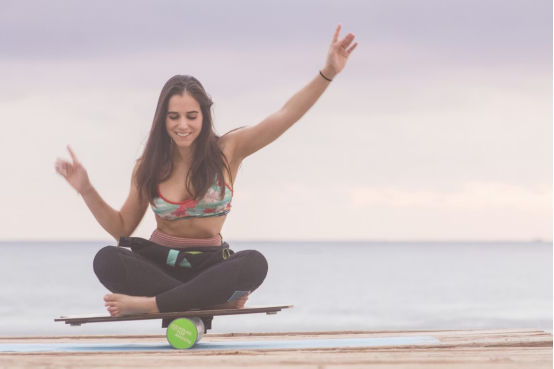
Strengthening the hamstrings and posterior chain
As an important component of the posterior chain, the hamstrings play a dual role in braking and power generation during running propulsion, jumping, and sudden stops. The unstable nature of the balance board allows the hamstrings to be fully trained during single-leg support and dynamic balance exercises. In particular, the forward and backward swinging motion and slight squatting movements can activate the synergistic contraction of the hamstrings and gluteus maximus, improving posterior chain strength while protecting the knee joint from excessive flexion and extension injuries.
Recommended exercises include standing on one leg with a slight knee flexion while gently swinging the board back and forth. During training, maintain core engagement and avoid anterior pelvic tilt. Research shows that this type of dynamic balance training improves neuromuscular control, enhances leg power and endurance, and is a core component of the leg stability board concept.
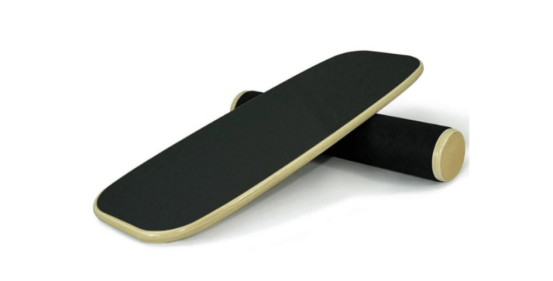
Single-Leg Control and Improved Athletic Performance
Single-leg control training is not only a refined method for leg strength, but also a key to improving athletic function. The balance board provides a subtly unstable environment, allowing the quadriceps, gluteus medius, and hamstrings to work together under single-leg weight-bearing, forming a complete leg power chain. Through repeated practice, the nervous system’s ability to coordinate muscle control is optimized, resulting in a more stable running stride, more agile changes of direction in ball sports, and a significantly reduced risk of knee and ankle injuries.
In daily training integration, it is recommended to add 5–10 minutes of single-leg control exercises after regular strength training, such as gentle forward, backward, or lateral swings, combined with core engagement and breathing rhythm. By recording the stability differences between the left and right legs, training intensity and movement precision can be further optimized. This method not only enhances leg endurance but also improves overall balance and lower limb function.
Practical suggestions
The value of a balance board in enhancing leg strength lies in its controllable instability and dynamic feedback. The quadriceps, gluteus medius, and hamstrings are engaged in specific roles during training, while simultaneously improving joint stability and endurance. For runners, ball sports enthusiasts, and even everyday fitness aficionados, consistent use can significantly improve single-leg control and achieve runner strength balance.
For users who want to delve deeper into balance board training, it’s recommended to explore more combination exercises, while incorporating core activation and stretching training for a more comprehensive leg strength enhancement. Find more detailed movement demonstrations and training strategies to help you maximize the improvement of leg strength on an unstable platform, making every run and workout more stable and efficient.
From the quadriceps to the hamstrings, every subtle adjustment builds stronger, more stable leg strength. The next time you step onto the balance board, focus on the feedback of each muscle, and you’ll discover that detailed strengthening of leg strength is not only about performance, but also a secret weapon for improving overall coordination.