
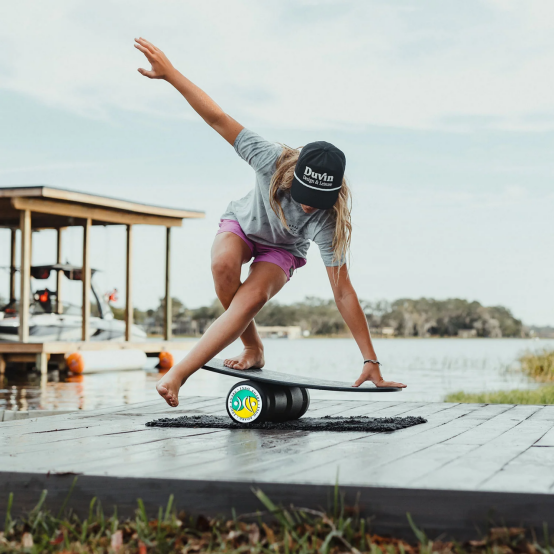
While it can significantly improve balance, core stability, and lower body strength, its use may pose unexpected risks for certain individuals. This article will analyze the characteristics of those who should not use balance boards from a professional perspective, explore balance board contraindications, and provide safe alternatives and training strategies.
Table of Contents
High-Risk Groups and Contraindications
1. Those recovering from acute injuries or recent surgery
Balance training places high demands on the joints, muscles, and nervous system. For individuals who have recently undergone surgery or have fractures or tendon injuries, using a balance board may increase the risk of further injury and delay the recovery process.
For example, patients who have just undergone ligament surgery on their knee or ankle are prone to secondary injuries if they attempt balance board training without a professional evaluation.
Tip: You can use balance training safety screening to assess joint stability and muscle control, thereby determining whether you are suitable for formal board training.
2. Patients with severe balance disorders or neurological diseases
For individuals with significant balance disorders or central nervous system diseases (such as Parkinson’s disease, post-stroke sequelae, or severe vertigo), direct use of a balance board may increase the risk of falls and fractures.
3. Patients with severe cardiovascular or respiratory diseases
Although balance board training is not a high-intensity aerobic exercise, the body generates a certain cardiovascular load. For users with heart failure, severe hypertension, or limited respiratory function, attempting it rashly may cause dizziness, palpitations, or even accidents.
4. Pregnant women in early pregnancy or at high risk
During pregnancy, the body’s center of gravity and the laxity of joints and ligaments undergo significant changes.
- Early Pregnancy: Any unstable training can increase the risk of falls and pose a potential threat to the fetus.
- Recommendation: Pregnant women should be extremely cautious when using balance board contraindications. It is advisable to first choose standing training with handrails.
5. Individuals with a high fear of falling
For individuals with a strong fear of highly unstable environments or who suffer from anxiety disorders, using a balance board directly may lead to excessive tension and muscle stiffness, thereby increasing the risk of falls.
6. Individuals with extreme weight or physical conditions
- Overweight individuals: The load-bearing capacity and stability of the board may not be adapted to sudden load changes.
- Weak core strength: For individuals with very little muscle mass, it is difficult to effectively control their balance, leading to loss of control.
Comparative Analysis of Training Paths
| Risk Level | Recommended Training Strategy | Alternative Tools |
|---|---|---|
| Acute/Severe | Professional physical therapy and strength rehabilitation. | Stability mats, handrail support. |
| Intermediate | Low-risk balance rehabilitation under guidance. | Foam boards and steady gait training. |
| Low/Ready | Progressive dynamic balance training. | Formal balance board training. |

Recommendations for Alternative Training Paths
For the aforementioned groups, using a balance board directly is not the only approach. In conjunction with balance training safety screening, the following alternatives can be adopted:
- Stabilizing mats or foam boards: Provide a slight sense of instability but have a low risk of falling.
- Stand on one leg with the support of a handrail: This helps develop lower limb strength and balance.
- Core muscle strengthening exercises, such as bridge pose, plank, and dead bug pose, to enhance control.
- Progressive dynamic balance training: Gradually adapt to an unstable environment through slight shaking or multi-directional movement.
Conclusion
While balance boards are powerful tools for improving core stability, balance, and lower limb coordination, they are not suitable for everyone to use immediately. Individuals with acute injuries or illnesses, neurological disorders, cardiovascular or respiratory limitations, pregnant women, and those with a severe fear of falling should establish a safety foundation through professional assessment and alternative training.
Professional balance training safety screening not only identifies users unsuitable for immediate use but also plans a scientifically sound, progressive training path for them, demonstrating the brand’s responsibility and professionalism.
If you’d like to learn how to design safe transition training for users with different physical conditions, you can click here to learn more about balance board training tips. Through scientific selection and a gradual training strategy, every user can find a balance between safety and efficiency.