Balance board training plateaus typically occur in week [number missing]

Many people encounter a perplexing phase during their balance board training: despite consistent daily practice, progress seems slow or even stagnant. Have you ever felt your body is no longer as sensitive to subtle balance changes when standing on the balance board as it was at the beginning?
This phenomenon is actually quite common and is known in the industry as balance board plateau, an indispensable part of balance training. This article will delve into the reasons for this phase, the underlying neuroadaptation mechanisms, and effective strategies for overcoming the plateau.
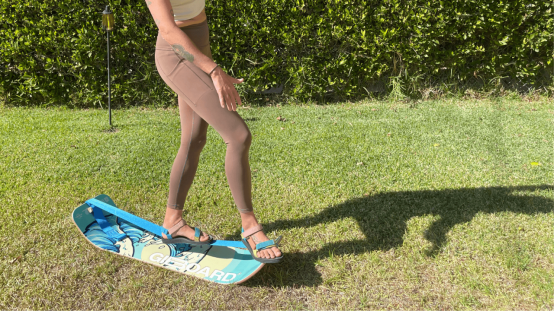
Balance board stagnation period time window
Research and user experience show that most people experience a noticeable subjective plateau during the third to sixth weeks of balance board training.
| Phase | Timeline | Characteristics |
|---|---|---|
| Rapid Learning | Weeks 1-2 | High sensitivity to sway; rapid neural circuit establishment. |
| Stagnation Illusion | Weeks 3-6 | Body responses become automatic; subjective feeling of “ineffectiveness.” |
| Movement Consolidation | Week 6+ | Subtle improvements in movement control quality. |
This isn’t because the training has failed, but rather because the body and brain have begun to adapt to the movement patterns. In the early stages, you’ll clearly feel the challenge; this is a result of rapid learning by the nervous system. However, as the neural circuits become familiar with these movements, the body’s responses become more automatic.
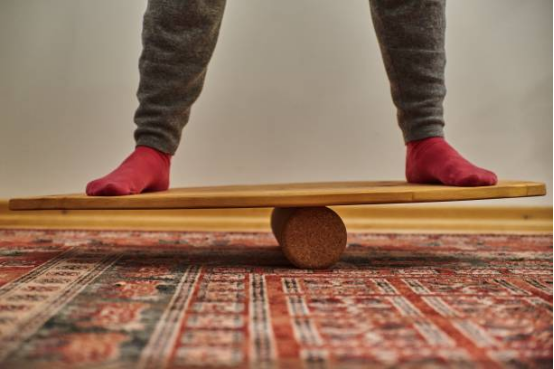
A Scientific Analysis of Neuroadaptation and Motor Familiarization
The learning curve of the nervous system
The slowdown in balance board progress is essentially due to neural adaptation. In the initial stages, the brain-spinal cord-muscle circuits rapidly establish new motor connections. With accumulated practice, these connections tend to stabilize, allowing the body to control balance more efficiently.
Your body has learned to “automatically balance,” but your consciousness is still seeking the initial tension and challenge, thus creating the illusion of stagnation. This phenomenon is called movement automatization in sports science.
Changes in sensory feedback
Another factor is the adjustment of sensory feedback. In the first few weeks, your brain relies heavily on the visual and vestibular systems to maintain balance. As neural adaptation deepens:
- Your perception of balance becomes more precise.
- Subtle bodily adjustments are made almost unconsciously.
- Although progress may appear to have stalled, actual motor stability and core control steadily improve.
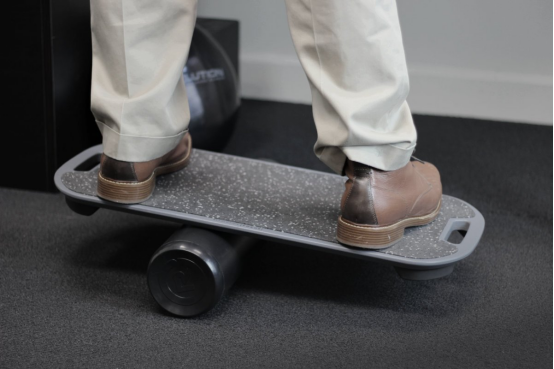
How to break through the balance board stagnation period
When you feel like you’re on a balance board plateau, try the following strategies to reactivate your neural circuits:
- Introducing diverse action modes: Try changing your rhythm or posture, such as standing on one leg, practicing with your eyes closed, or performing dynamic balance movements.
- Extend training time and control intensity: Appropriately extending the duration of each session while adjusting difficulty helps stimulate deep muscle control.
- Focus on movement quality: Instead of focusing on “how long you can stand,” record small improvements in the amplitude of slight body swaying and the details of joint adjustments.
- Utilizing external feedback tools: Stability tracking apps can provide quantitative feedback, proving that your neural control is actually improving despite the sensory illusion of stagnation.

Psychological management and long-term expectations
Psychological factors are equally important during plateaus. Most people give up training because they feel they are not making progress, which is actually the stage where they are most likely to miss out on long-term benefits.
Understanding the nature of balance training stagnation can help trainees adjust their expectations, shifting their focus from “seeing immediate external progress” to “improving motor control quality and neural adaptation levels.”
Establishing long-term training expectations can also be achieved by setting small, phased goals, such as mastering new movement patterns or improving balance fine-tuning. This method not only alleviates plateau anxiety but also strengthens the sense of engagement.
Summary and Action Recommendations
Plateaus are not failures but an inevitable part of balance board training. Most people experience a subjective plateau between the third and sixth weeks, but this is precisely a manifestation of neural adaptation and motor automatization.
By introducing diverse movement patterns, adjusting training intensity, focusing on movement quality, and using external feedback tools, trainees can successfully overcome plateaus and maintain long-term progress.
In future training, when you stand on the balance board again, consider reflecting on the significance of this plateau: it’s evidence of your body’s quiet growth and a crucial juncture in developing stable, fine motor control. Remember, plateaus are not the end but a necessary stage on the path to long-term balance improvement.