
surface butHave you ever wondered why some balance boards, even those called “balance boards,” cost almost as much as an entry-level skateboard, while others can cost as much as a set of gym equipment? They may look similar and seem to be used the same, but their price points seem to be parallel lines. Some might simply attribute it to a premium price. However, if you delve deeper into the materials, structure, margin for error, safety redundancy, and long-term usage costs, you’ll find that the value of a premium balance board isn’t hidden on the surface, but rather lies in those unseen yet real costs.
,This article doesn’t discuss which is more expensive or cheaper but rather dissects a high-end balance board, analyzing its costs from materials and structure to safety redundancy, processing difficulty, and lifespan. It provides a comprehensive analysis of where the real cost of a high-end balance board lies , helping you understand why an expensive balance board is worth it, avoiding blindly chasing the most expensive options or falling into the trap of “cheap alternatives.”
and rollers.1. Material costs are not as simple as just wood planks + rollers.
Most balance boards on the market look similar, but the difference in experience brought about by the quality of balance board material is like the difference between solid wood and particleboard—it goes far beyond just the visual aspect.
High-quality balance boards use North American maple, rubberwood, or bamboo laminated structures, with 7–11 layers per veneer. Each layer is laminated with alternating grain directions to reduce fatigue cracking after long-term bending. In contrast, low-end products may only use composite boards or low-cost birch, with fewer layers and higher glue content. Problems may not be visible in the short term, but they are more prone to breakage under frequent jumping training or high weight loads.
surfacesFurthermore, the surface friction coating also accounts for an unexpected proportion of the cost. High-end models use sweat-resistant and abrasion-resistant sandblasted surface and environmentally friendly, low-odor coatings, which are not only scratch-resistant but also maintain stable friction on the feet, preventing sudden falls due to wet feet during training. In contrast, cheap boards, in order to reduce costs, use ordinary sandblasted coatings or even bare boards, and the sandblasted surface peels off after two months of use, drastically reducing the training experience.
.In other words, the high price isn’t for aesthetics but for sustained stability.
Users aren’t just stepping on wood but on a reliable material structure that can withstand repeated pressure .
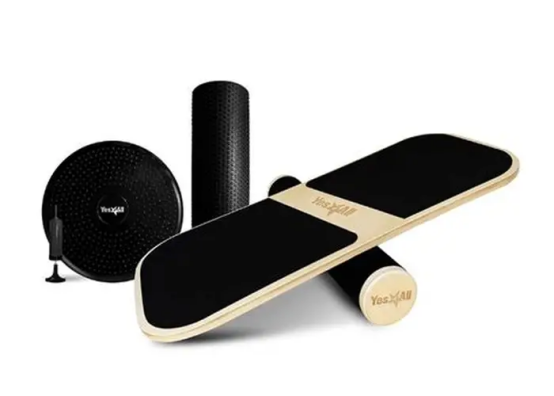
2. Structure and Design: More like a piece of sports equipment than a piece of wood.
.People often think that a balance board is just a “board + roller,” but the real cost lies in the stability and safety margin of the dynamic structure .
The anti-detachment edge on the bottom of the high-end board is precision-machined using CNC machining. The curvature calculation is based on actual center of gravity offset tests, and there is a clear proportional relationship between the edge height, board length, and roller diameter. Proper design ensures controllable movement; a deviation in proportion turns training into a gamble.
designed butA harsh reality is that
Low-priced balance boards are often not designed, but rather imitated.
Where does the real cost of design lie?
- Deformation curve test after long-term load
- Inertial repeated impact test of users of different weights
- a controlledRoller coating with controlled friction coefficient ensures it’s neither slippery nor sticky.
- Obtuse angle treatment at the edges reduces the probability of ankle injury in case of accidental loss of balance.
These processes mean more samples, more waste plates, and more human and machine time.
.What you’re paying for isn’t materials, but the possibility of not falling, not breaking boards, having controllable movements, and being able to continuously improve .
3. Safety redundancy costs: The most expensive part is the one that is not visible.
.Most people focus on the appearance of the balance board when evaluating it, but they overlook something more critical: safety under extreme conditions .
For example:
- Could extremely humid environments cause deformation?
- Can the corners and edges remain structurally intact after an impact?
- Will the rubber coating on the roller age and crack after long-term use?
,High-end products undergo fatigue testing—tens of thousands of cycles of reciprocating impact, rollover, static pressure, and dynamic pressure tests.
More importantly, they incorporate safety redundancy designs , ensuring a safety margin even after performance degradation over long-term use.
“when.”Low-end products often meet the specifications on paper but lack sufficient safety margins. Once the nominal load is exceeded, breakage is not a question of “whether” but “when”.
EvenThe price you pay is for a sense of security during training:
even if you’re not in good form today, you don’t have to worry about being hurt by the board.
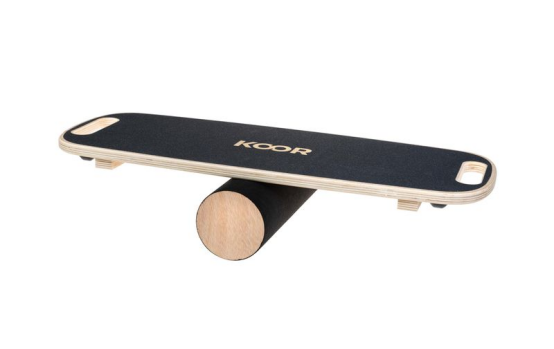
4. Service life and long-term costs: Cheaper may be more expensive.
Many users’ real experiences are like this:
,A cheap balance board is great for the first week, but by the third week it’s worn down from sandblasting, and by the sixth week the board surface softens or the rollers slip. Eventually, you have to buy another one, so the price of two cheap boards equals one premium balance board , but the training experience and safety cannot be replaced equally.
In terms of lifecycle, high-end balance boards typically last for years, not months.
Fatigue-resistant materials, stable rubber layers, and thicker roller coatings mean they maintain performance even during high-intensity core training. For users looking to improve core strength, joint stability, and surfing/skiing balance with a balance board, the long-term investment and safety benefits are more significant.
.In other words, the real cost is not the amount spent on the day of purchase, but the stability and reliability of each use .
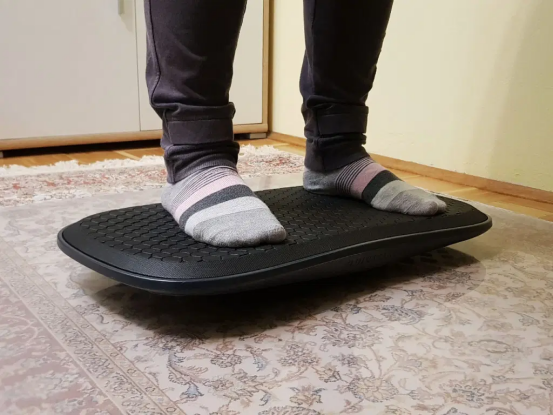
5. So where exactly did that price go? Looking at the ledger will make it clearer.
“controllability.”If you break down the costs, you’ll find that the key to determining the price is not the materials but “controllability”.
| Cost items | High-end balance board investment | Differences in low-end products |
| Material quality | Multi-layered heavy-duty solid wood/bamboo/maple wood | Composite wood or thin board |
| Surface treatment | Abrasion-resistant sandblasted surface, environmentally friendly paint, sweat-proof treatment | General sandblasting or bare plate |
| Roller structure | High-friction rubber coating, high resilience | Ordinary PVC or sponge covering |
| Safety Redundancy | Multiple rounds of stress testing and fatigue life design | The structural boundaries are unclear. |
| Life cycle | High-frequency training for 1–3 years is available | Strength declines within 1–3 months |
None of these activities are about showing off skills; they are all designed to ensure that the training does not turn from a challenge into a risk.
End
When you see two balance boards that look similar but have vastly different prices, ask yourself a deeper question: Am I really buying the board itself, or a stable, long-term training experience?
The significance of being expensive is never the price itself, but the value brought by meticulous calculations, durable materials, safety redundancy, and lifespan.
,If you want to learn more about how balance board training affects deep core, ankle stability, and athletic performance, you can refer to more balance board content here , where you will see the significance of using high-quality equipment in long-term training.
Perhaps a premium balance board is not just “expensive” but “more worthwhile.”
How much are you willing to pay for reliable, safe, and sustainable training?
Feel free to think about it, discuss it, and leave a comment with your answer.