Why balance board training changes movement quality before strength gains.

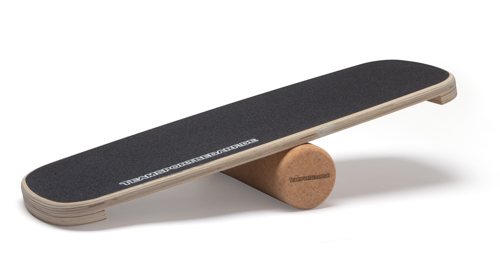
On the smooth floor, a balance board lies quietly. Its surface wobbles slightly, a subtle reminder that you might lose your balance at any moment. As your feet step onto it, your core muscles begin to fine-tune, and your joint receptors respond rapidly. At this moment, you’re not pursuing greater power output but rather mobilizing your entire nervous system to optimize your movement path and adjust your stability strategy. This is precisely why, in balance board training, improvements in movement quality often precede increases in strength.
Neural adaptation precedes force: Why motor control takes precedence over strength
In sports science, balance board neuromuscular adaptation is a core concept for understanding training sequences. While muscle strength is important, the nervous system is the master controller of bodily movements. It determines when and how force is released and how various muscle groups are coordinated to complete complex movements.
When using a balance board, the uncertainty the body faces prompts the nervous system to prioritize establishing efficient movement control strategies. Studies show that in the first few weeks of practice on a balance board, beginners experience a significant improvement in the smoothness and stability of their movement paths, while muscle strength growth is relatively slow. This indicates that the body tends to optimize movement patterns first to reduce injury risk and improve efficiency, rather than immediately pursuing greater strength.
An observation of professional athletes also supports this: under balance training, core stability and lower limb coordination show significant improvement even before strength training. This phenomenon is also known as the training philosophy of “quality of movement over weight.”

Performance of movement quality: subtle adjustments and overall coordination
Movement quality is not just about making the movements look smooth; it involves multiple aspects:
- Center of gravity control: On the balance board, even slight tilts forward, backward, left, and right require the body to constantly adjust its posture, which trains the vestibular system and the immediate feedback ability of muscle receptors.
- Movement path optimization: Every fine-tuning involves the nervous system’s precise coordination of joints and muscle groups. Your body learns how to complete movements with minimal energy expenditure.
- Overall coordination: Not only core strength, but also shoulders, hips, knees, and ankles are involved in movement correction, forming a complete kinetic chain.
Through these training methods, balance board movement quality is significantly improved, resulting in more stable and efficient movements. This improvement is often more pronounced than strength gains because neural adaptation occurs much faster than changes in muscle structure.
How balance training affects performance in other sports
Improvements in movement quality extend beyond performance on the balance board; they transfer to other sports and daily activities. This is known as the training transfer effect.
For example, runners who practice on a balance board experience a significant increase in knee stability, a more balanced gait, and a reduced risk of falls. Basketball players who practice on a balance board show marked improvements in stability during quick changes of direction and landings. These effects demonstrate that the neural adaptations resulting from motor control balance training are not limited to training scenarios but can be manifested in a variety of movements.
Furthermore, scientific research indicates that even with relatively low force output, high-quality movements can still reduce the risk of injury and improve exercise efficiency. This further explains why movement quality is more apparent than strength gains in the early stages of training.
Why does strength improvement occur after movement optimization?
Strength gains depend on changes in muscle fiber structure, which typically require longer and more sustained mechanical stimulation. In contrast, neural adaptation is a rapid response mechanism: neurons optimize the sequence of muscle activation, reduce unnecessary muscle tension, and improve the precision of motor control.
In balance board training, the body faces high-frequency, unpredictable balance challenges. To maintain stability, the nervous system learns how to distribute force first, rather than directly increasing force output. In other words, even before significant muscle growth, your movements are already more efficient and safer. This logic is crucial for understanding the training philosophy of “movement quality over weight.”
If you want to systematically learn how to optimize movement quality in balance training, you can refer to more… Balance board training guide to help you scientifically plan your training sequence and intensity.

The core of the training philosophy is action priority.
In our daily training, we often tend to pursue strength numbers, but balance boards remind us that the body first needs to learn how to control movement. Improving the quality of movement not only enhances training effectiveness but also reduces the risk of injury and builds a long-term foundation for athletic performance.
Balance board movement quality is a result of the nervous system’s self-optimization, reflecting a training philosophy: master control before strength; stabilize movement before increasing load. Understanding this can help athletes and training enthusiasts fundamentally improve training effectiveness, rather than simply pursuing short-term strength gains.
The next time you step onto the balance board, observe your subtle adjustments: every forward lean and every minor adjustment is a silent process of neural adaptation. Strength increases over time, but the habit of high-quality movement, once formed, will continue to benefit you in various sports and daily life.