What changes will your body retain when you stop using the balance board?

Standing in an empty room, the floor smooth and flat, a balance board lies quietly beneath your feet. You used to spend ten minutes each day practicing maintaining your balance, adjusting your posture, and feeling the subtle changes in your body. So, when you stop using the balance board, will those efforts disappear? What changes will your body retain, and which abilities require continuous stimulation to maintain? This article will delve into balance board training retention, balance training adaptation, and long-term effects to answer this crucial question for you.
Body memory: The stability you develop doesn’t disappear immediately.
In scientific literature researching motor skills, “body memory” is widely mentioned. In the case of balance training, when you use a balance board for extended periods, your nervous system undergoes adaptive changes. Specifically, your vestibular system, muscle receptors, and neuromuscular coordination all experience long-term remodeling.
Long-term balance board practice makes core muscles (abs, back, and hip muscles) more sensitive and efficient, and this change doesn’t immediately disappear after you stop training. Even after several weeks without training, you’ll still be more stable than a beginner in standing or simple balance movements. The long-term effects of balance board practice are due to this “underlying muscle memory,” a direct manifestation of training transfer.
For example, a study on balance training for university students showed that after eight weeks of balance board training, even four weeks after the training ended, the subjects’ single-leg balance ability remained at more than 80% of what it was at the end of the training. This shows that once certain abilities are “remembered” by the body, they have a certain degree of persistence.
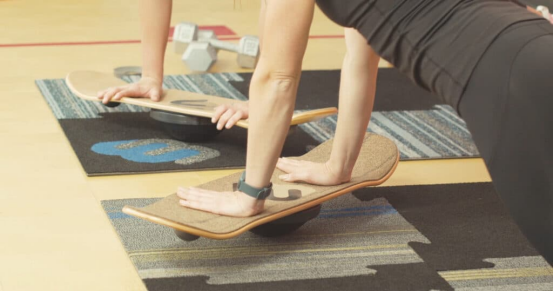
The ability to maintain balance requires continuous stimulation: balance is not entirely automatic.
However, not all changes are permanent. As training ceases, some skills that rely on high-frequency stimulation will gradually weaken. Dynamic balance, rapid shifts in center of gravity, and complex balance responses are all abilities that require continuous practice.
Neurological adaptation is initially preserved, but muscle strength and joint flexibility will gradually decline if not used for a long time. Simple static balance may still be maintained, but when faced with unstable ground or complex movements, the body may react slowly or fail to adjust its posture in time. This is the core logic of balance training: balance training adaptation is dynamic and requires continuous stimulation to maintain optimal results.
An observation by a sports scientist also confirms this: even if athletes maintain basic training during competition breaks, their performance on complex balance tasks will still decline, suggesting that there is an upper limit to the transfer effect of training and that the skill retention period must be extended through periodic practice.
Training Transfer: How Much More Can Your Body Benefit from Balance Training?
Stopping the use of the balance board doesn’t mean all previous efforts were wasted. In fact, training transfer is an important concept: the ability to apply skills gained in specific training sessions to other relevant scenarios.
Balance training not only improves static standing stability but also enhances control over everyday movements, such as maintaining posture while climbing stairs, walking briskly, and even reaction speed when quickly adjusting direction during sports activities. In other words, even if you stop using a balance board, the neuromuscular coordination skills you’ve developed will still be evident in other activities.
This also explains why many sports rehabilitation programs incorporate balance training as a core component: it is highly adaptable and can produce long-term effects across multiple movement patterns. Research has shown that neural pathways established through high-frequency training remain effective over time, meaning your previous investment continues to pay off in your life.
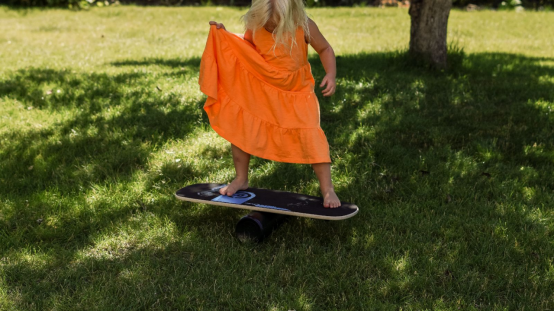
How to extend the retention period of training results
Although the body retains some skills, maintaining peak performance still requires strategic stimulation. The following methods can help extend the retention period of training results:
- Intermittent practice: Even if you don’t use the balance board every day, short periods of practice once or twice a week are enough to maintain neural adaptation.
- Diverse stimulation: Combining yoga, core strength training, or functional exercises can strengthen core stability and dynamic balance.
- Progressive challenges: Gradually increase the difficulty, such as practicing with your eyes closed or on unstable ground, which allows the body to continuously adjust its neural control strategies.
- Pay attention to daily posture: Maintaining good standing and walking habits is equally important for preserving balance skills.
If you want to systematically understand how to maximize the long-term returns of your balance board, you can come to me for more in-depth strategy learning.
Stopping does not equate to forgetting; the key lies in understanding bodily adaptability.
When you stop balance boarding, your body doesn’t immediately forget the results of your past training. Core strength, static balance, and neuromuscular coordination will persist for a certain period. However, dynamic balance, quick reactions, and complex skills still require continuous stimulation. Understanding this difference helps you develop a long-term training mindset, thus avoiding the short-term effects of one-off, high-intensity training.
Body memory is a delicate balance; it allows you to enjoy the continuation of training results while reminding you of the importance of maintaining stimulation. The next time you stand on the balance board, consider which abilities you want your body to permanently remember and which need regular refresher training. With this mindset, training is no longer a short-term investment but a gradually accumulated form of life capital.
In exploring the effects of balance training, you may discover that the long-term effects of balance board training extend beyond the muscular and neurological levels, extending to improvements in mindset and self-awareness. Your body may forget subtle motor techniques, but it will never forget the experiences and habits of striving to maintain stability.