
A biting wind howls, snowflakes gently patter against your goggles. You stand atop the mountain, your skis gleaming silver, a mix of excitement and nervousness filling your heart. Skiing is an extremely challenging sport; every turn, every acceleration tests your core strength, balance, and precision.
For ski enthusiasts, pre-season training is crucial, and the balance board is becoming an indispensable tool in scientific training. It not only simulates weight transfer on the slopes but also improves edge control, laying a solid foundation for the upcoming ski season.
The deep connection between skiing and balance
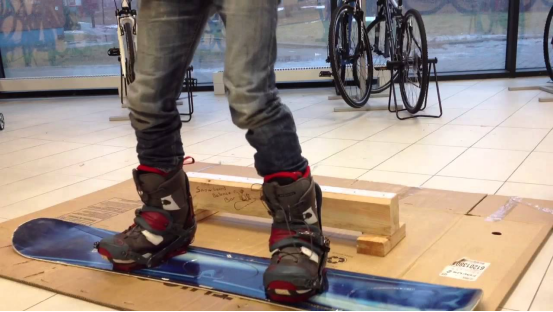
The essence of skiing lies in balance and control. Whether descending a slope at high speed or turning a corner, skiers must adjust their center of gravity and coordinate the movements of their upper and lower limbs and core muscles in a very short time. Training with a balance board allows for the simulation of these dynamic adjustments in a safe environment. The instability of the board forces the body to make subtle adjustments to its center of gravity, thereby activating the vestibular system, deep core muscles, and neuromuscular pathways.
ski balance prep training before the ski season can significantly improve lower limb joint flexibility and core stability, while reducing the risk of accidental injuries. For example, through micro-swinging exercises in the forward, backward, left, and right directions, the body continuously learns how to quickly adjust posture during movement, which is precisely the skill required for cutting snow and turning while skiing.
Furthermore, balance training can improve the reaction speed of motor nerves. When skiers encounter sudden changes in the terrain, their bodies can adjust quickly, rather than relying on instinct. This training method not only improves technical skills but also strengthens the coordination between the body and the brain, making the skiing experience smoother and more confident.
Practical application of balance board in edge control
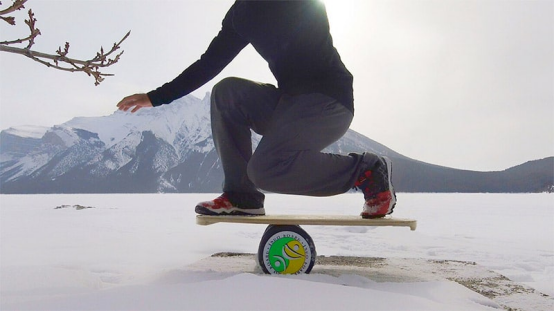
Edge control is the core of skiing technique. Mastering good edge control not only allows for smoother cornering but also improves speed and safety. Balance boards help skiers practice movement patterns similar to those on snow by simulating lateral leaning and weight transfer.
Training methods may include:
- Left and right tilting practice : Stand on the board with both feet and sway left and right, mimicking the lateral center of gravity adjustment during gliding.
- Forward and backward weight shift : Slightly bend your knees and lean your upper body slightly forward or backward to practice controlling the pressure on the blade in curves.
- Single-leg support switching : Alternately support the board with one leg to enhance leg and core stability.
- Rotation and twisting exercises : Perform light rotations or twists on the board to improve control of the core and hips.
Through these exercises, skiers can simulate the key sensations of gliding on snow indoors, preparing them for the high-intensity training of the ski season. At the same time, this training also enhances lower limb endurance and the coordination of small muscle groups, making movements more precise and reducing errors caused by instability on the slopes.
Scientific training combinations and cycle arrangements
To maximize the effectiveness of a pre-season board workout , the training can be divided into a systematic combination covering balance, core strength, and lower body coordination. Recommended training cycles are as follows:
Warm-up phase (10–15 minutes)
- Dynamic stretching: shoulder, hip, and ankle joint movements
- Light aerobic exercise: skipping rope or stepping, to increase heart rate and muscle activation.
Balance board core training (20 minutes)
- Tilting left and right, shifting weight forward and backward, and alternating between single-leg movements are all performed.
- Hold each position for 30–60 seconds, and repeat 3–4 sets.
- You can incorporate arm movements or light weights to increase overall coordination.
Strength-assisted exercises (15 minutes)
- Squats, lunges, and bridges strengthen the lower body and gluteal muscles.
- Combined with balance board movements, it improves neuromuscular control.
Fun and challenging training (10 minutes)
- Add spinning wheels, balls, or markers to task-based balance exercises.
- Improve focus, reaction speed, and sense of body control
The entire training program is conducted 3–4 times a week, gradually increasing the difficulty of movements and training time, which can significantly improve skiers’ physical adaptability and skill reserves before the ski season arrives.
Long-term benefits of balanced training
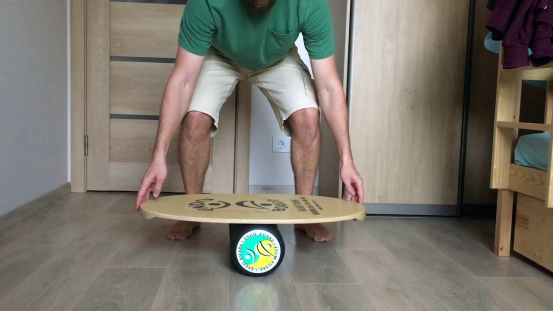
Consistent balance board training not only prepares you for skiing but also leads to comprehensive physical improvements. Increased core strength reduces the risk of lower back and knee injuries; improved balance and reaction time give skiers more confidence during high-speed turns; and this training also cultivates motor awareness and body control, positively impacting other sports as well.
skiers develop through balance board training during snow sports training help them maintain body stability on complex slopes. In the long run, this training also promotes improved athletic psychology—the stability of the body brings a greater sense of psychological security when facing steep slopes and high-speed skiing, making skiing more enjoyable and liberating.
Integrate the balance board into daily life
Even outside of snow, balance board training can be integrated into daily practice, providing a head start for the ski season. In just a few minutes in the living room, gym, or balcony, you can complete the core preparations needed for snow. For skiers seeking efficient training, this method is safe, flexible, and inexpensive.
If you’d like to learn more about professional pre-season board workout combinations, pre-season training techniques, and practical movement guidance, please visit our website. Abundant training examples, scientific movement breakdowns, and real-life skier experiences will help you create a scientific training plan and take your skiing performance to the next level.
Every subtle sway on the balance board is a precise workout for body coordination and core control. It not only simulates weight transfer and edge control during skiing, but also improves core strength, neural reaction speed, and overall coordination. Through a systematic training regimen, pre-skiing preparation is no longer about blindly piling on strength, but rather a scientific and efficient process of physical adaptation and skill optimization. Integrate balance training into your daily life, and you’ll find that freedom and fluidity on the slopes begin with every practice session on the balance board.
Explore more balance boards to become your secret weapon for improving your performance this ski season. Every practice session builds upon your future slopes, making your skiing experience more confident, precise, and enjoyable.