Balance Board vs. Bosu Ball vs. Yoga Ball: Which Is the King of Home Core Training?

Your living room is not a gym storage room.
Let’s face it: when you click the “buy” button, you imagine yourself with abs, but two weeks later, the reality is often that the giant rubber ball is gathering dust in the corner of the living room or becoming an expensive shelf for your dirty clothes.
For those living in city apartments or small spaces, choosing home fitness equipment is not just a math problem about calorie consumption but also a battle for space. You need more than just a tool to train your core; you need a partner that can coexist peacefully with your living space and even enhance the style of your home.
In this battle of core training tool recommendations, we’ve set our sights on three heavyweight contenders: the classic yoga ball, the gym regular Bosu ball, and the recently emerging balance board. Which one can deliver the ultimate core training experience without sacrificing your quality of life?
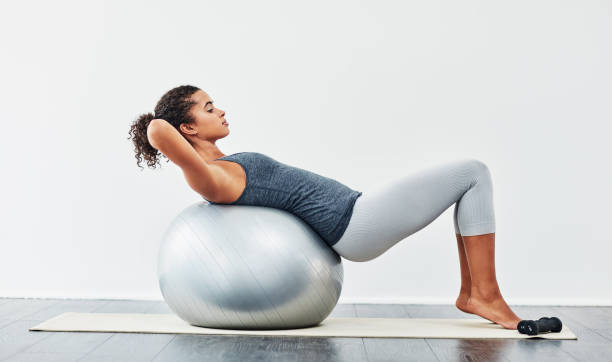
Yoga ball: an inexpensive giant, a space-saving “ruler.”
Yoga balls are almost always the first choice for every home fitness beginner. Their advantages are obvious:
- Low price
- Spine-friendly stretching function
- Extremely easy to get started with
However, in real life, it is often a nightmare for small apartments with fitness equipment.
- Space Black Hole: A standard 65 cm diameter yoga ball occupies nearly half a cubic meter of space, whether you use it or not. In this era where every inch of land is precious, its “rent” is much more expensive than its purchase price.
- Storage problem: Unless you’re willing to spend 10 minutes inflating and deflating it before and after every training session, it’s practically impossible to store. It will roll around, either tripping over your cat or looking out of place in the background of a video conference.
- Durability concerns: Most PVC balls will age over time, especially in households with pets. Cat claws can not only destroy the ball but may also cause a sudden “explosion.”
Conclusion: If you have a spacious, dedicated gym, it’s a great supplementary tool. But for the living room, it’s a “huge presence” that you have to tolerate.
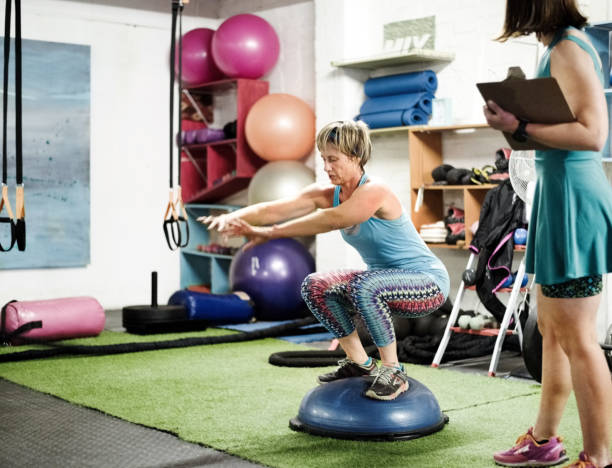
Bosu Ball: A professional rehabilitation choice, but is it really suitable for home use?
When you walk into any commercial gym, you’ll see the semi-circular Bosu ball. It holds an unshakeable position in the field of instability training and rehabilitation. Its flat side provides stable support, while its spherical side offers a challenge.
However, when we discuss the differences between the Bosu Ball and the balance board, the industrial design attributes of the Bosu Ball become apparent:
- Single function: The Bosu Ball is great for squats, burpees, or rehabilitation single-leg stands. However, its movement trajectory is relatively fixed, making it more like doing an “unstable floor” than a fluid exercise experience.
- Home Layout Integration: Its appearance is typical of “gym aesthetics”—thick rubber, a huge base, and vibrant blue or black. Placing it in a sophisticated Scandinavian- or Japanese-style living room would look extremely out of place.
- Weight and Height: It’s heavy, and because of its hemispherical shape, it can’t be rolled up like a yoga mat or tucked under a sofa like a skateboard. It’s destined to take up a conspicuous corner.
Balance Board: The Minimalist’s Invisible Personal Trainer
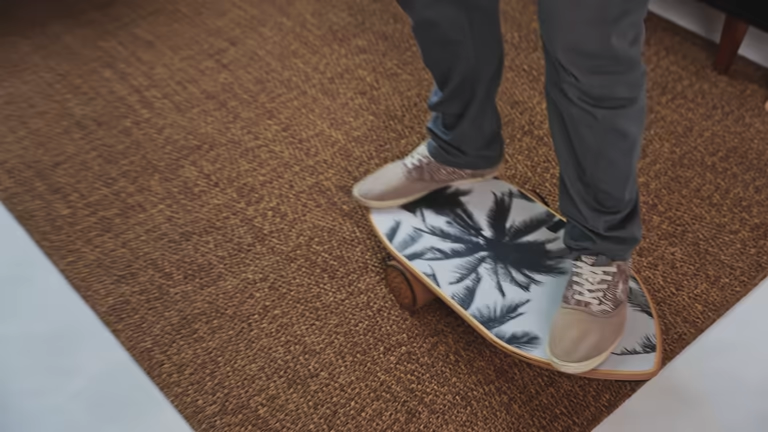
Now, let’s take a look at the Balance Board. If you’re looking for the ultimate solution for fitness equipment in a small apartment, it might be the current underrated king.
Dynamic core activation vs. passive support
Unlike the “semi-static” instability of a Bosu ball, a balance board typically consists of a rigid deck and a roller. This structure creates two dimensions of instability (lateral swaying and roller rolling).
The moment you step on it, your body must engage your deep core muscles and proprioception to maintain balance. This trains not only your muscles but also your nervous system. It delivers more than just soreness; it provides a “flow” experience similar to surfing or skiing.
The Art of Storage: Disappearing Under the Sofa
This is a game-changing blow to Balance Board compared to the other two.
- Thickness: The board surface is usually only 1-2 cm thick.
- Separate design: The rollers and the plate are separate.
This means that after training, you can simply slide them under the sofa, under the bed, or lean them against the wall like works of art. They take up no space and truly achieve “ready when needed, gone when not.”
Next-generation home aesthetics
Modern balance boards are typically made of high-quality solid wood (such as birch or maple) with a non-slip matte finish or high-quality felt. They don’t look like cold, impersonal equipment but rather like meticulously crafted pieces of furniture.
They don’t need to be hidden away; they can even become the centerpiece of the living room.
Experts advise that when choosing a balance board, pay attention to the curvature of the board surface and the material of the rollers. High-quality cork rollers are not only quiet but also protect your floors, an advantage that cheap plastic rollers cannot match.
The ultimate showdown: Who deserves your investment?
To illustrate this more clearly, we will compare the two from four key dimensions:
| Dimension | Yoga Ball | Bosu Ball | Balance Board |
|---|---|---|---|
| Area | Huge (cannot be folded) | Medium (awkward shape) | Minimal (flat storage) |
| Aesthetics | Low (strong plastic feel) | (Industrial style) | High (natural materials) |
| Durability | Low (easily broken/aging) | High-quality (durable rubber) | Extremely high quality (solid wood/composite materials) |
| Training Fun | Monotonous (highly repetitive) | Highly functional (leaning towards serious) | High (possesses playful attributes) |
| Price range | $20 – $50 | $100 – $180 | $80 – $200 |
While yoga balls are inexpensive, their replacement frequency and space requirements are actually quite high. Bosu balls are suitable for serious rehabilitation trainees. Balance boards, on the other hand, achieve a perfect balance in terms of storage, aesthetics, and training versatility. They are not just a training tool but a symbol of a lifestyle—a combination of physical strength and a clean, organized living space.
If you’re tired of the rubbery smell and tripping over equipment in your room, it might be time to upgrade your gear collection.
FAQ
Is the balance board harder to learn than the Bosu ball?
Yes, the learning curve for the balance board is relatively steeper. The Bosu Ball has a stable base, so you won’t fall even if you lose your balance. The Balance Board, however, requires you to find your center of gravity on dynamic wheels.
But it’s precisely this higher level of challenge that makes its stimulation of the core muscles deeper and more efficient. For beginners, it’s recommended to practice on a carpet or against a wall for support.
Can a balance board completely replace the stretching function of a yoga ball?
It cannot completely replace a yoga ball. Yoga balls have unique advantages in back stretching and spinal relaxation because the ball’s curvature supports the entire back.
If your primary goal is stretching rather than core strengthening, a yoga ball still has value. However, if you’re looking for a core training tool, a balance board is far superior to a yoga ball for strengthening.
Will long-term use of the Balance Board damage my home’s floors?
It depends on the configuration you choose. Low-quality hard plastic rollers can scratch hardwood floors.
However, most high-quality balance boards come with cork rollers or a board surface with a felt layer, a material designed to protect hard floors. For added protection, it’s recommended to use it on a yoga mat.